.avif)
Mobile banking isn’t just a convenience anymore — it’s the foundation of the banking industry. For fintech disruptors, the app is the brand. Banking app users don’t stick around for pretty interfaces or clever features — they stay for seamless, intuitive, and frictionless experiences that just work.
Designing a mobile banking app that drives engagement and keeps the bank’s customers loyal is an expensive exercise and getting the critical steps right is non-negotiable. This article breaks down the research-backed best practices that separate the top-tier mobile platforms from the forgettable ones.
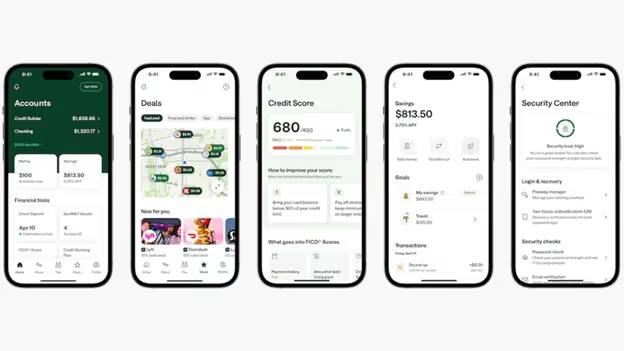
Before we break down the research-backed design playbook, let’s take a look at who’s already doing it right. From challenger banks to global fintech powerhouses, these companies aren’t just ticking boxes—they’re redefining what digital finance feels like:
Chime, a digital banking startup, has rapidly gained popularity in the United States by offering a user-friendly mobile banking experience. With features like fee-free overdrafts, early direct deposit access, and real-time transaction alerts, Chime has attracted over 10 million users. The app's intuitive design and commitment to user-centric features have been pivotal in its growth.
Monzo, a UK-based digital bank, emphasizes transparency and user empowerment. Its mobile app offers real-time spending notifications, budgeting tools, and seamless money management features. Monzo's focus on user experience has led to a loyal customer base and recognition for its innovative approach to banking.
Capital One has invested heavily in its mobile banking app to provide a comprehensive and intuitive user experience. Features include account management, credit score tracking, and personalized financial insights. The app's design prioritizes ease of use, contributing to its high user ratings and widespread adoption.
Revolut offers a global financial super-app that combines banking, currency exchange, and investment services. Its mobile app is known for its sleek design and user-friendly interface, allowing users to manage multiple financial aspects seamlessly. Revolut's commitment to innovation has positioned it as a leader in the fintech space.
Smiles Mobile Remittance, developed by Digital Wallet Group, focuses on providing international money transfer services. The app's user-centric design and functionality have earned it the Good Design Award in Japan. Features like real-time transaction tracking and a straightforward user interface cater to the needs of its diverse user base.

The banking apss we explored aren’t legacy institutions playing catch-up. These are bold, new platforms built for scale, speed, and user obsession. The redefine the banking industry as much as they upset and disrupt it. If you’re building a banking app, these companies set the bar — and it’s high. But if you focus on these critical steps in your banking app design process, there exists no reason why your Fintech can’t make the list:
An intuitive interface minimizes the learning curve, allowing users to navigate the app effortlessly. Employing familiar design patterns, clear navigation structures, and visually appealing layouts ensures that users can perform tasks without confusion. Research underscores the importance of user-centered design in achieving high usability standards in mobile banking applications.
A seamless onboarding experience is vital for user retention. Simplifying registration processes, providing clear instructions, and minimizing required inputs can significantly reduce drop-off rates. Effective onboarding strategies encourage users to engage with the app's features promptly.
Security is paramount in mobile banking. Implementing robust measures such as biometric authentication and end-to-end encryption protects user data. However, it's essential to balance security protocols with usability to prevent user frustration. Studies highlight the need for secure yet user-friendly authentication methods in mobile banking apps.
Personalized experiences enhance user satisfaction. Tailoring content, recommendations, and notifications based on user behavior and preferences makes the app more relevant and engaging. Personalization strategies have been shown to increase user engagement in fintech applications.
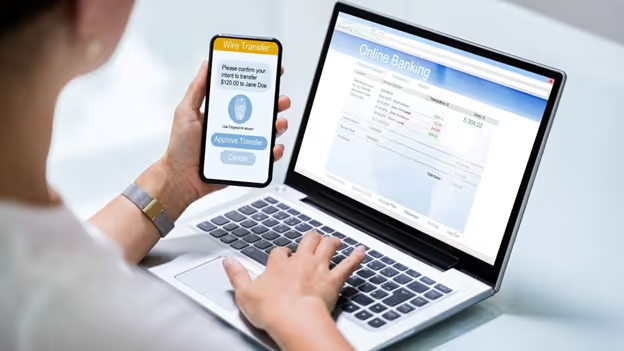
Regularly updating the app based on user feedback ensures that it remains aligned with user needs and expectations. Establishing channels for users to provide feedback and acting on this information demonstrates a commitment to user satisfaction and continuous improvement.
Designing for accessibility ensures that users with disabilities can effectively use the app. Incorporating features like screen reader compatibility, high-contrast modes, and adjustable text sizes makes the app more inclusive. Accessibility considerations are crucial for reaching a broader user base.
Fast loading times and responsive interfaces are critical for user satisfaction. Performance optimization techniques, such as efficient coding practices and minimizing resource usage, contribute to a smoother user experience. Users are more likely to continue using apps that perform reliably.

If you’re serious about building a mobile banking app that users don’t just tolerate — but love, trust, and use daily — you need more than code. You need strategy, design thinking, fintech fluency, and flawless execution.
That’s where You Source comes in. With over a decade of experience, 500+ global clients, and elite development teams on demand, You Source helps fintech companies move fast without breaking things.

Whether you’re prototyping a bold new concept or scaling an established platform, they bring the technical muscle and product mindset to help you build mobile banking experiences that actually win.



.jpg)
.avif)