
Trump wants Greenland. Is he gonna buy it? Is he gonna take it?
The thing everyone is missing here: It's not about Greenland. It's about the world's armies and how AI has forever changed how they work.
It's a seismic shift in a system that has relied on massive numbers of humans and manual input for decades. Now, there's a better way.
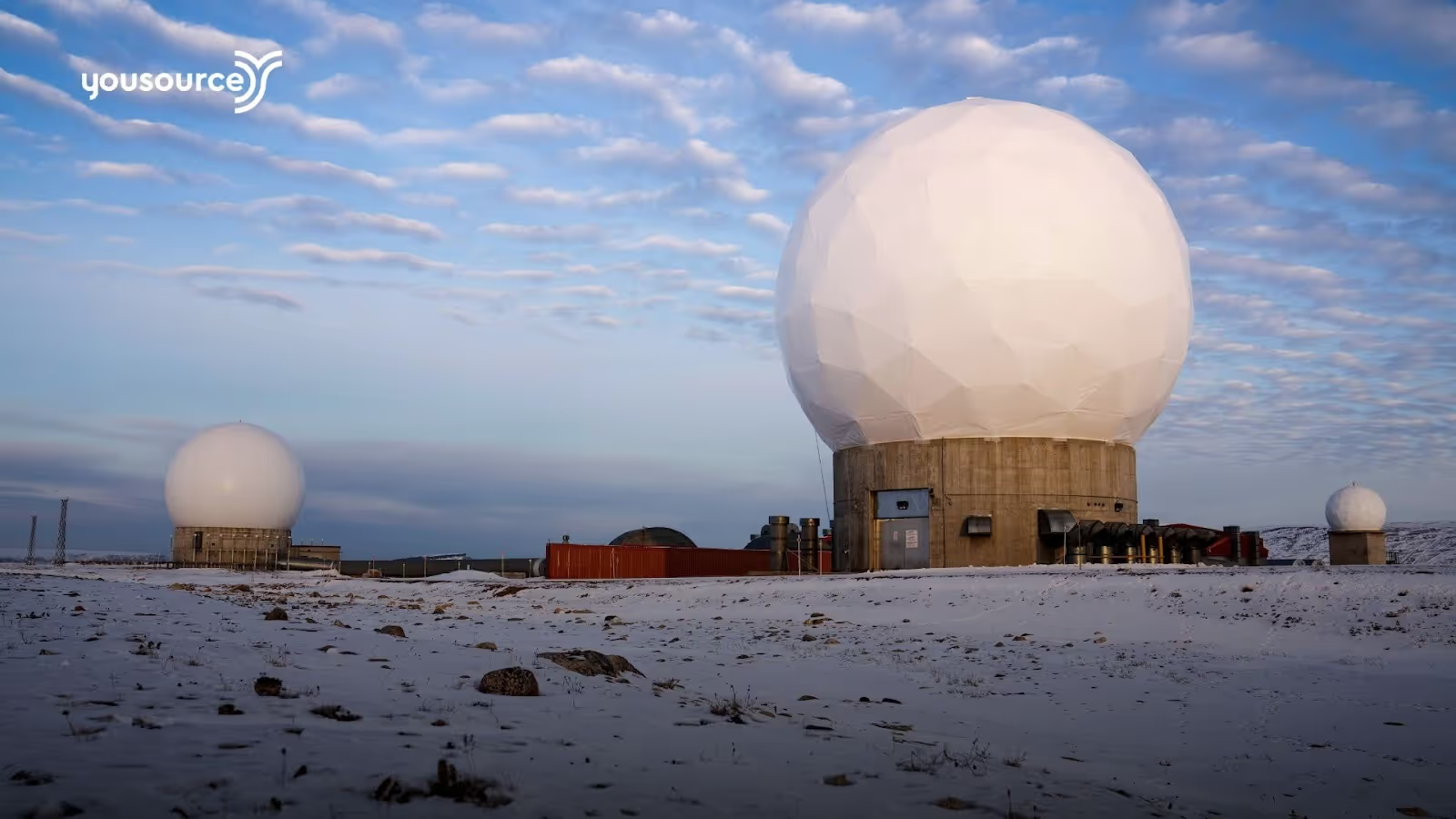
The U.S. already operates Pituffik Space Base on Greenland — its northernmost military installation, hosting radar and satellite systems for early warning of attacks. But in 2026, that's not enough. You need AI.

Inspired by Israel's Iron Dome but vastly more ambitious in scope, Trump's Golden Dome aims to create an AI-powered, multi-layered shield to protect the entire U.S. homeland from a wide range of aerial threats: ballistic missiles, hypersonic weapons, cruise missiles, and drones launched by adversaries like Russia, China, North Korea, or Iran — from ground, sea, air, or space.
Goodbye, large armies stationed on far-off lands. Goodbye, manual observation and deterrence. Hello, automated national security.
This shift is already underway, as highlighted by Palmer Luckey, founder of Anduril. He describes how surveillance no longer depends on fixed bases or heavy infrastructure. Instead, it relies on autonomous, solar-powered AI surveillance towers — like Anduril's Sentry Towers — that can be deployed anywhere.
These towers integrate radar, thermal vision, visible spectrum imaging, and other sensors into AI models to detect people, vehicles, animals, and drones from miles away. They even mesh together, communicating to form distributed intelligent networks, turning vast areas into smart, self-monitoring zones with minimal human involvement.

How does it work? In essence, AI serves as the "brain" of Golden Dome — integrating disparate data, accelerating decisions, and enabling autonomy. Sound familiar? That's because it follows the blueprint of AI in any large company or SME:

AI merges huge real-time streams from satellites, radars, and sensors into one unified threat picture instantly. In a company, AI merges data from Sales, Accounting, R&D, and Operations.

AI quickly spots launches, predicts paths, separates real warheads from decoys, and identifies friends vs. foes. In a company, AI spots discrepancies, flags patterns, predicts outcomes, and separates potential from probable.

AI enables near-instant "left-of-launch" or boost-phase intercepts (in tight ~3-minute windows), fire control, and interceptor coordination with minimal human input. In a company, AI agents nudge management-level decisions, automatically handle back-office tasks in bulk, and aggregate data into Business Intelligence that would take humans hours—all in a split second.
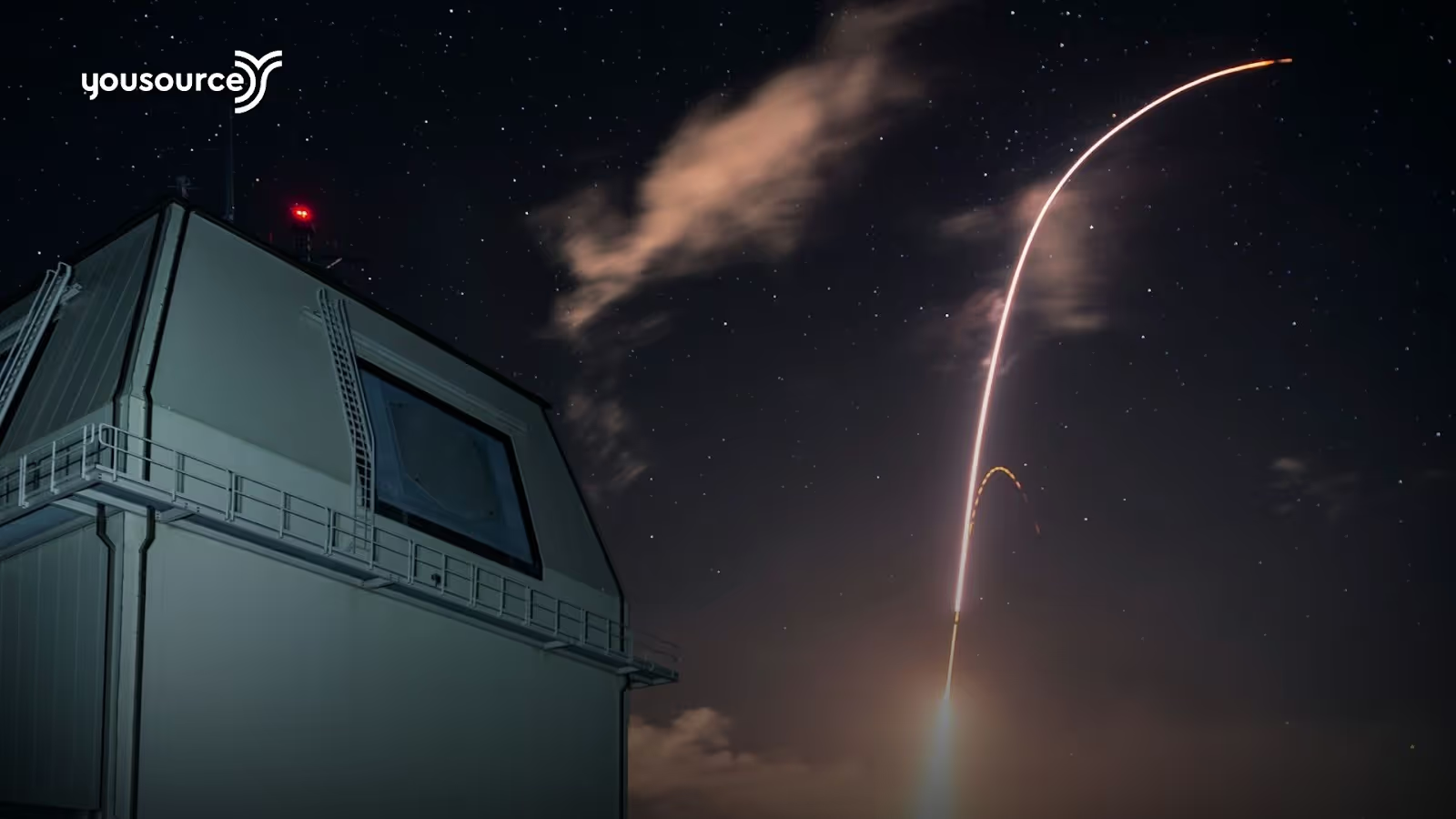
AI runs simulations, spots design flaws early, and improves the system over time using reinforcement learning and geospatial models. In a company, AI agents coexist with human employees, identifying trends, risks, and opportunities that colleagues might never notice.

In the end, Trump wants Greenland because it will amplify the U.S.'s military might and preparedness with thousands — if not millions — of automated capabilities in the blink of an eye. It's not a fluke. It's not a temper tantrum. He's following the exact playbook every CEO and business owner should currently be thinking about: how to use AI to scale your company and employees' abilities beyond infinity.