.avif)
Running a CPA firm of any size comes with a specific drill: clients want answers yesterday, talent is expensive and hard to keep, and tax season still feels like it lasts nine months. It’s the type of job that has not changed much over the past 170 years. Reconciliations. Balance Sheets. And chasing documents. Lots and lots of documents.
The digital age promised to speed things up. Alas. The only thing that changed was off-the-self software and emails layered into the existing grind.
A growing number of your peers aren’t just talking about shifting their teams into high-value mode manually anymore - they are actively using AI to automate workflows that reclaim hours so they can serve their clients better. This is where they move the needle for more billable hours.
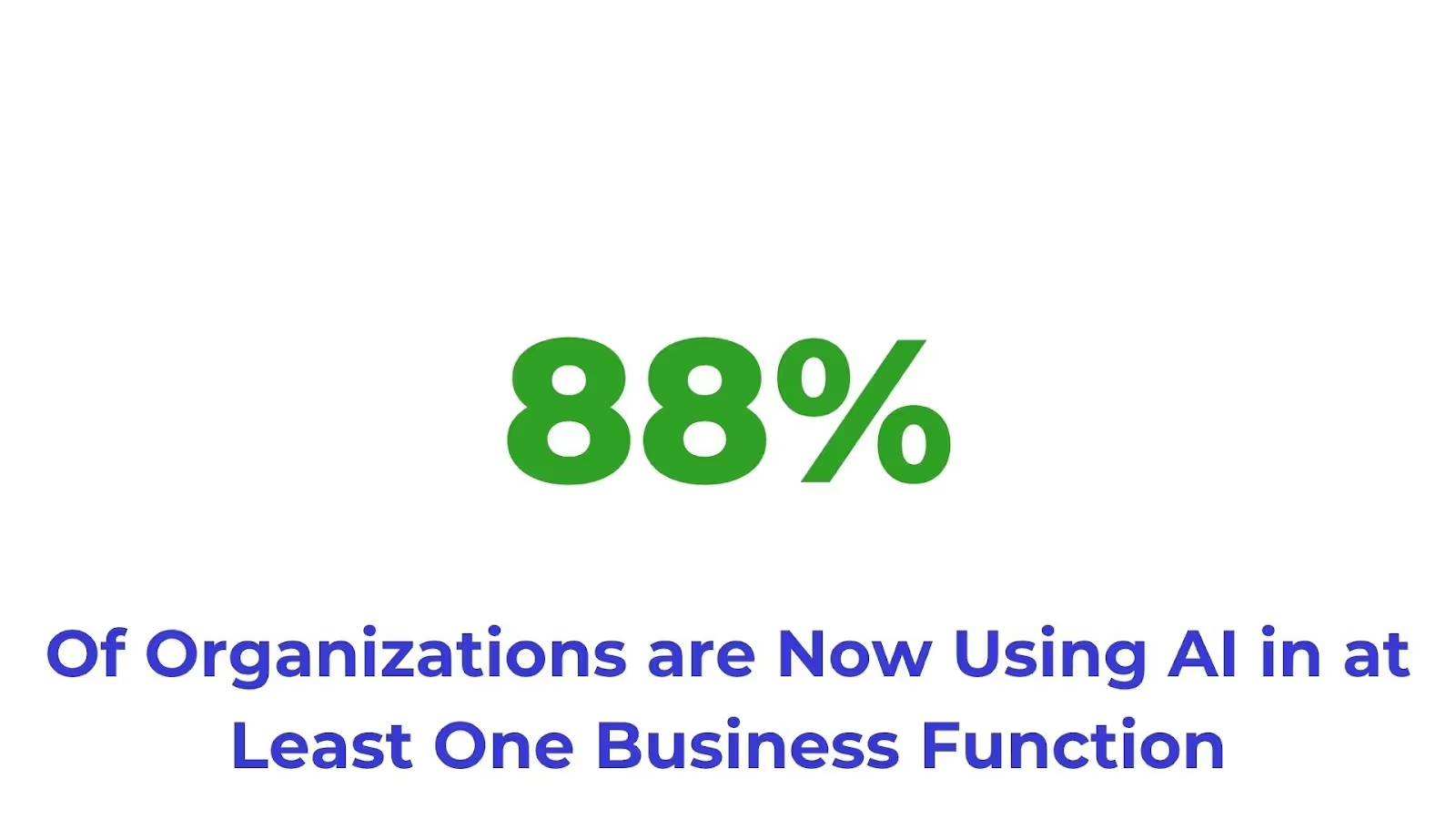
First off - this isn’t Big 4 territory with seven-figure budgets. It’s real firms just like yours getting measurable wins right now. AI adoption in accounting is moving fast. According to McKinsey’s 2025 Global Survey on AI, 88% of organizations are now using AI in at least one business function, with professional-services firms (including accounting) leaning heavily into knowledge management and workflow automation.
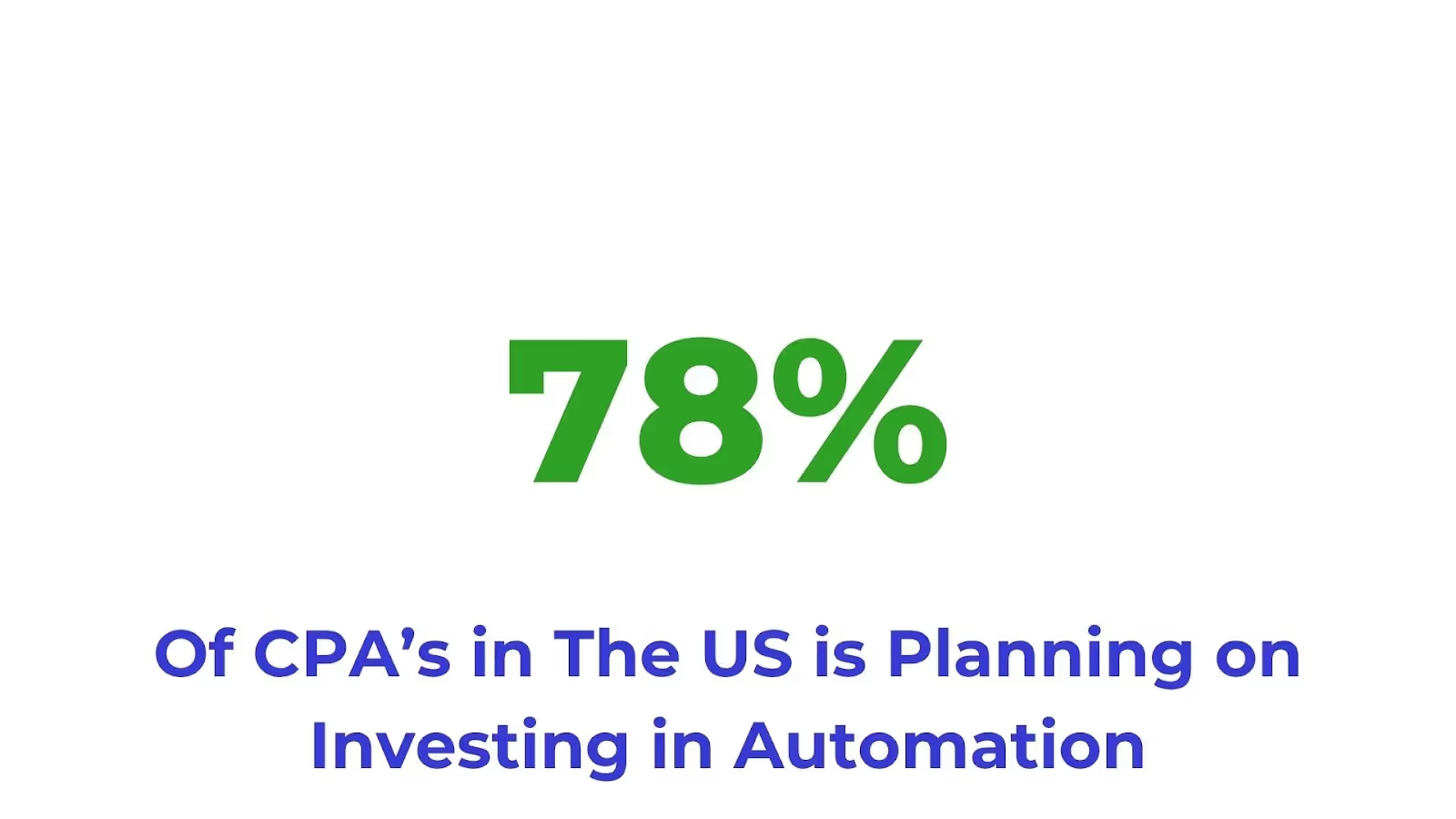
Closer to home, the data for accounting firms is even more eye-opening. Wolters Kluwer’s 2025 Future Ready Accountant report shows AI adoption among tax and accounting firms quadrupled from 9% to 41% in a single year. In the U.S. specifically, 70% of firms use AI at least weekly, 35% use it daily, and 78% plan to increase their investment over the next few years.
Smaller firms aren’t sitting on the sidelines either. Many are starting with practical, low-risk automations and scaling up to full agentic workflows — exactly the kind that handle document chasing, reconciliations, and compliance without constant human babysitting.
Automated workflows shine when it takes over those repetitive, multi-step processes that used to eat 40–60% of your team’s week. Here’s where firms like yours are seeing the fastest payback:
The shift that is happening feels less like “replacing people” and more like giving your team superpowers so they can focus on the strategy clients actually pay premium rates for.

Of course it’s not all rainbows. The same reports we mentioned, note that integration with legacy systems, upskilling your team, and keeping a human in the loop for final sign-off are still real considerations. We’re not replacing humans, remember? We are drastically expanding what they can fit into an 8-hour day.
The smartest firms we’ve seen start with a single painful process (document chasing or bank recs), measure the time saved, then expand. They treat AI Automation as a reliable junior teammate rather than a set-it-and-forget-it magic box.
The real trick? Having it managed by professionals who build AI for a living. There is no off-the-shelf magic solution when it comes to your own, internal company processes - why would there be a one-size-fits-all when it comes to AI Automation?
The biggest gainers in early-adopters are those who put their trust into a reputable AI-automation partner. They manage it. You do what CPA’s do. Just much faster. Across the board, the pattern is the same: firms that started small (one or two workflows at a time) are now handling more clients with the same headcount, closing books faster, and racking up billable hours.
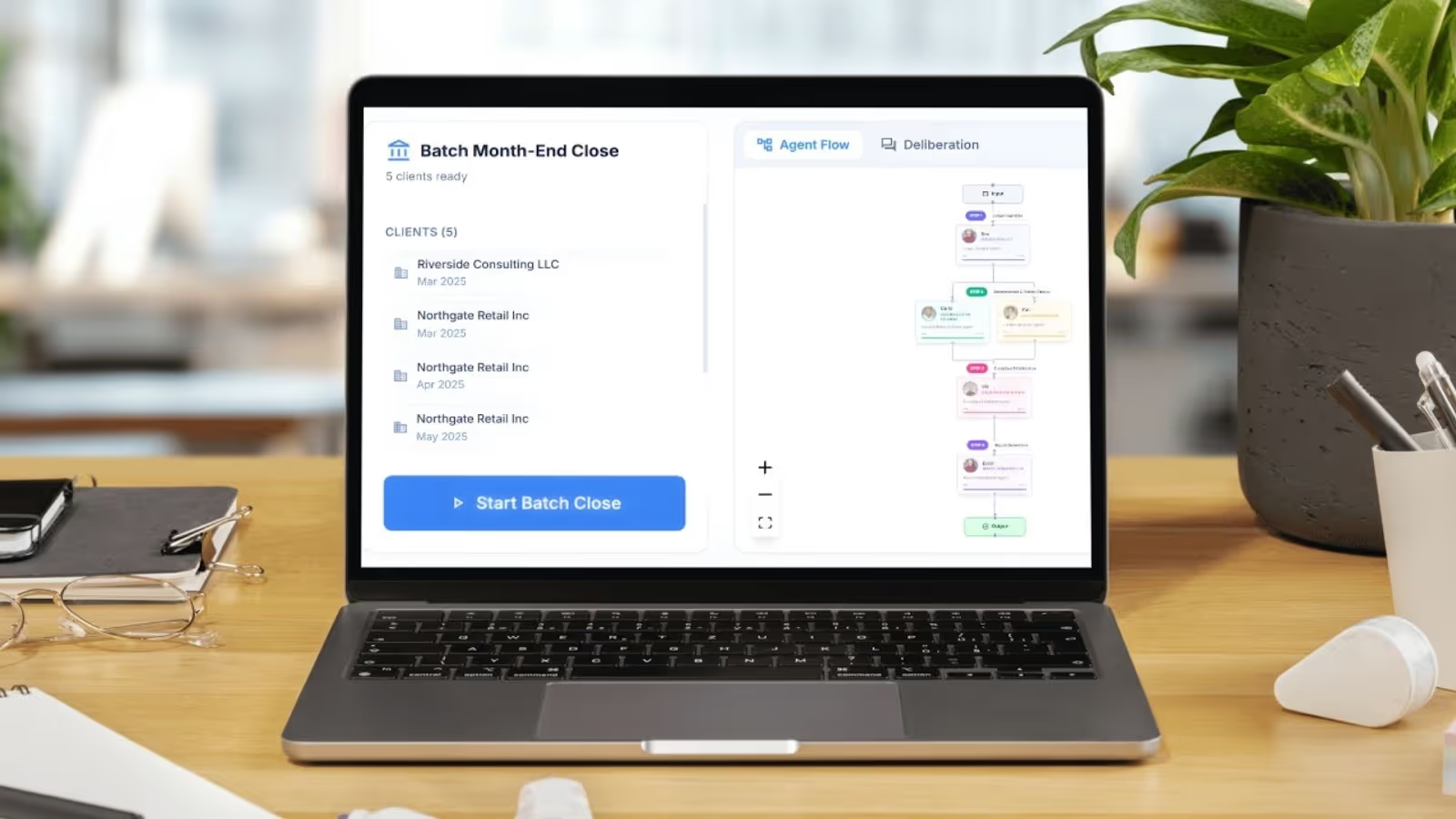
If your firm is still relying mostly on manual checklists and spreadsheets for intake, reconciliations, or tax-season status tracking, you’re probably leaving meaningful capacity — and growth — on the table every single month.
The firms pulling ahead in 2026 aren’t the biggest or the richest. They’re the ones who decided to treat automated workflows as practical tools to multiply what their people can achieve. They’re serving more clients, delivering faster insights, and building practices that feel less seasonal and more sustainable.
In short — ask yourself two things: How would I bring these tools into my existing processes right now, and if I don’t experiment now — will I be comfortable with the widening gap between me and my competitors?