
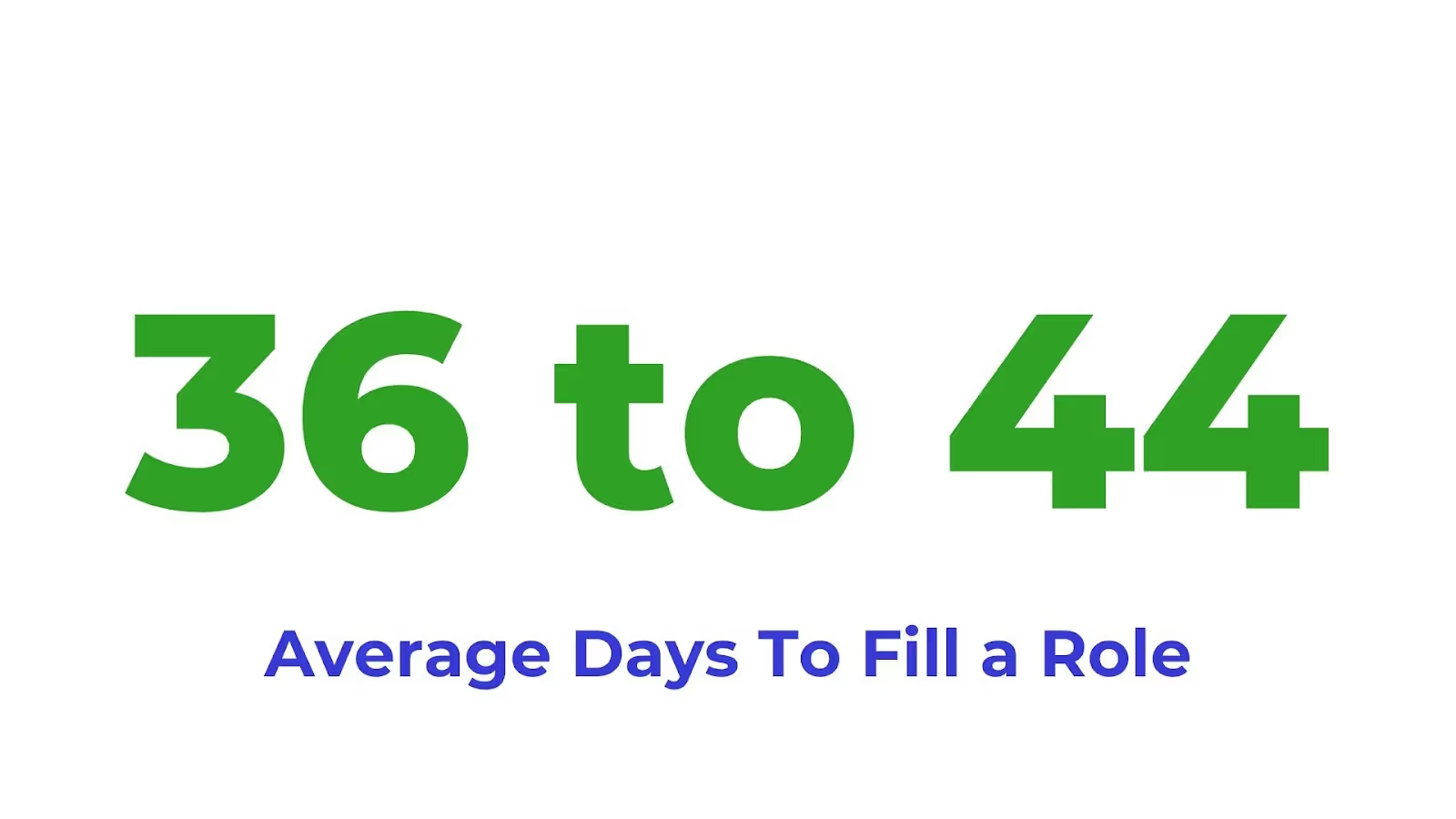
If you're running a recruitment agency in the USA right now, you know exactly how brutal the numbers can be. The average time-to-fill still sits around 36–44 days nationally. Every extra day a role stays open means your client is losing productivity. On top of that, studies consistently show that recruiters spend 40–60% (and in many cases up to 70%) of their time on repetitive tasks like resume screening, reformatting documents, scheduling, and data entry instead of actual recruiting.
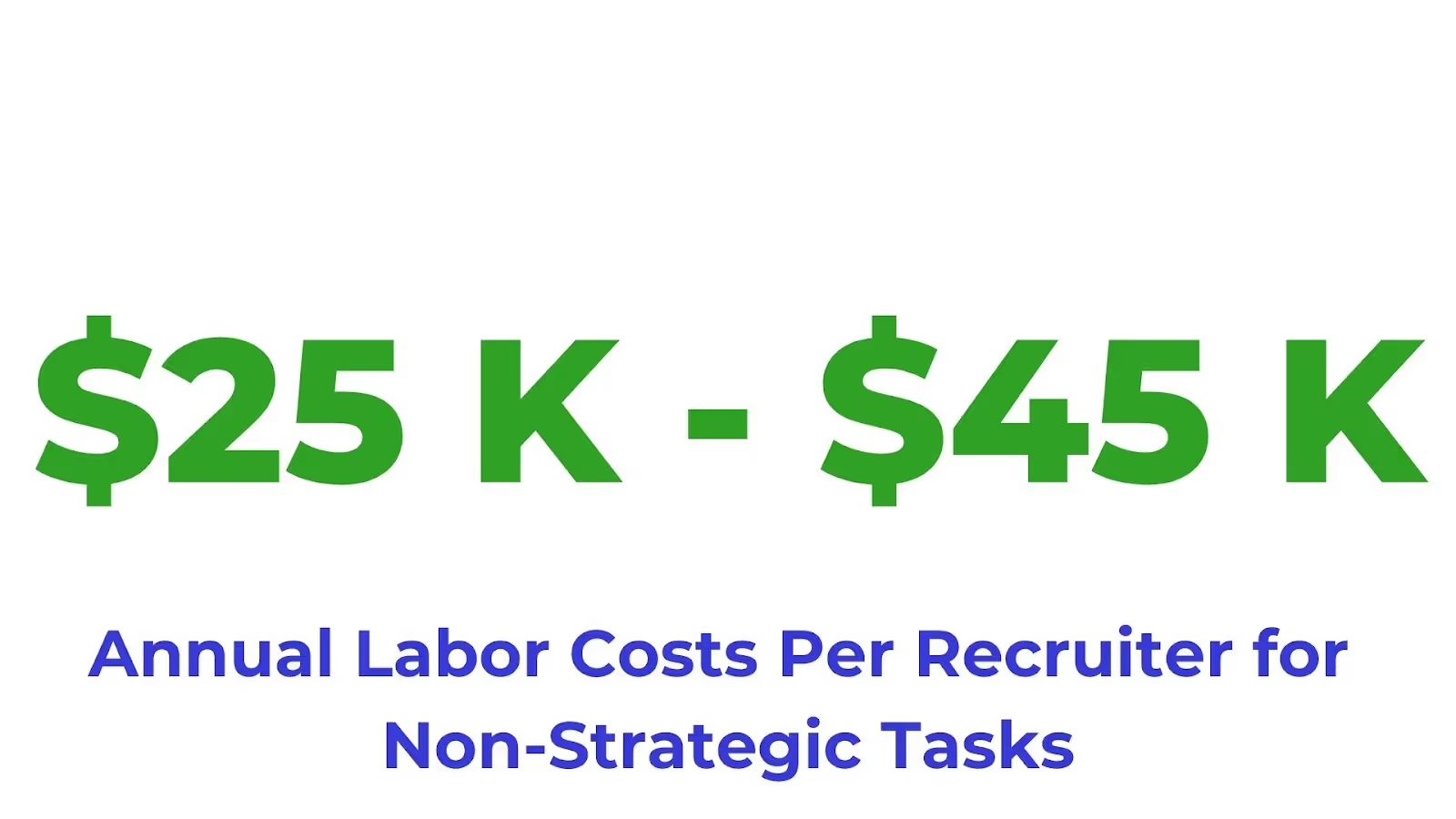
To put that in real dollars: with the average recruiter in the U.S. earning roughly $27–$35 per hour, that means a single recruiter can easily burn through $25,000–$40,000+ in annual labor costs just on tasks that add little strategic value. That’s time and money not spent building relationships, talking to candidates, or closing more placements — which directly squeezes your margins even when placement fees are healthy.
And here’s the part that really stings: while your clients may pay you a solid placement fee per role, your own internal costs keep climbing. Every hour wasted on manual chaos eats into profitability, limits how many reqs your team can handle, and makes scaling nearly impossible without hiring more recruiters.
What if a fully customizable solution can quietly take the heavy lifting off your team’s plate while letting you stay firmly in control?
Picture this: a big client posts a req and suddenly you’re flooded with resumes in every format imaginable — PDFs, Word docs, scanned images, weird layouts from overseas applicants. Manually standardizing them, spotting experience gaps, flagging job-hoppers, and trying to gauge cultural or job-description fit… it adds up fast.
What if you could scan 45 resumes in about 40 seconds, standardize 100 messy ones in under a minute, and get clean, structured summaries that highlight experience, education, potential red flags, and even rough cultural fit?
Would that speed up those 36 to 44 days it takes to fill a role for your company? Of course it would!
Leading firms have been tracking this shift closely, and the results are hard to ignore:
For recruitment agencies, this isn’t just about working faster—it’s about scaling volume without burning out your team or sacrificing quality.
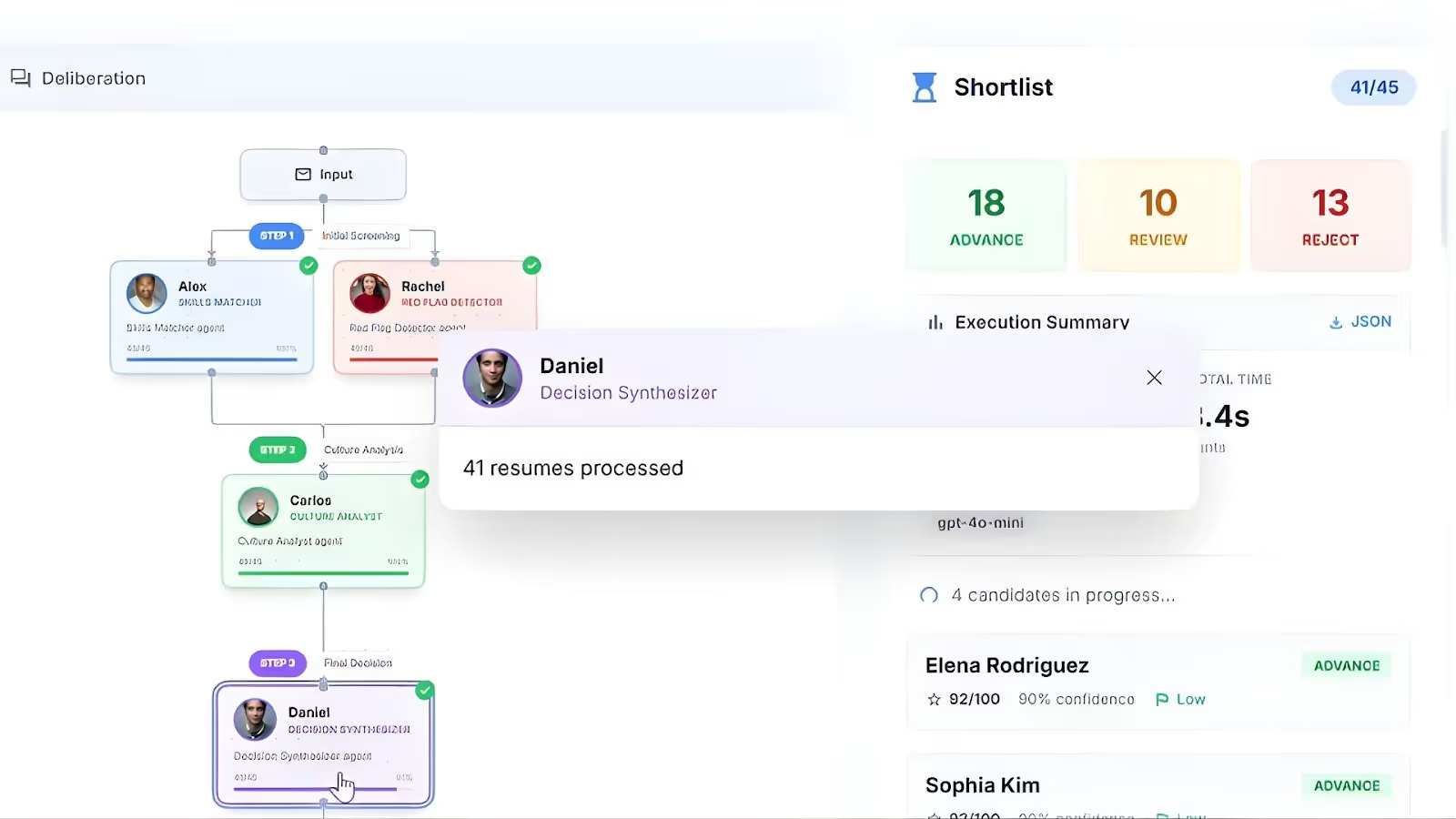
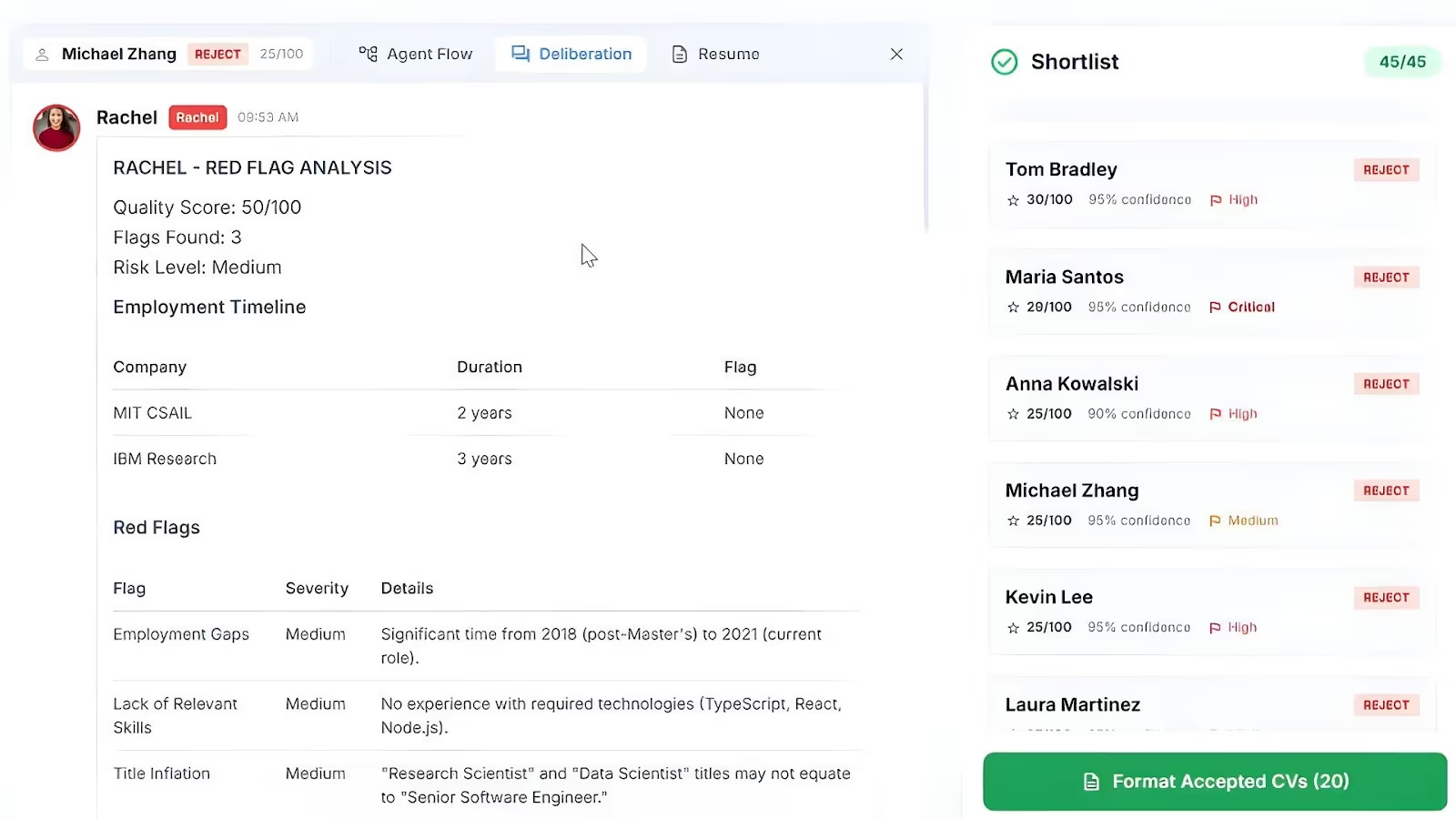
The real magic happens when an automated workflow doesn’t just screen, but actually summarizes candidates across the dimensions that matter: relevant experience, education, how well they match the job description, and even signals around cultural fit (based on criteria you define). It can flag potential issues like long employment gaps or rapid job-hopping so nothing slips through unnoticed.
This kind of consistent, structured evaluation helps reduce unconscious bias and leads to more data-informed shortlists. Studies show AI-assisted processes can improve diversity outcomes and overall hire quality when the human recruiter still makes the final call.
And because these systems snap onto your existing ATS, you avoid painful rip-and-replace projects. You keep what already works and simply layer on the automation where it delivers the most value.
Here’s the part I love: none of this replaces great recruiters. In fact, it does the opposite.
When the boring, repetitive work gets handled automatically, your team gets to do what they’re actually great at—building trust, reading between the lines in conversations, negotiating offers, and nurturing client relationships. Recruiter satisfaction often goes up, turnover drops, and everyone wins.
BCG puts it nicely: as Automated Workflows take over routine tasks, recruiters can focus on the proactive, relationship-driven work that really moves the needle for staffing and recruitment firms.
Clients in the US expect speed and quality when it comes to their recruitment needs. Agencies that lean into customizable automation are seeing:
These recruitment firms grow quicker and their doors stay open for longer. It’s not about chasing every shiny new tool. It’s about thoughtfully adding capabilities that integrate cleanly, stay flexible to your unique processes, and keep the human judgment at the center.
If you’re feeling the pressure of long cycles, inconsistent formatting headaches, or recruiters buried in admin, it might be worth exploring how customizable automated workflows could fit into your operation.
Further reading (worth checking out):