The Artifact Pack
These are the three artifacts the book keeps pointing at: the task ticket, the board and its cadence, and the roadmap slice. Each one is plain enough that a non-technical founder can read it and a developer can work from it. That dual readability is the point. The artifact is where the business and the keyboard meet.
Nothing here is proprietary, and nothing here is heavy. If a template makes the work harder to see rather than easier, cut a field.
The task ticket
The unit of delivery. One task, scoped small enough to ship on its own and check when it's done. A good ticket fits on one screen and answers four questions: what, why, what counts as finished, and how you'll know.
| Field | What goes here | Why it earns its place |
|---|---|---|
| Title | One line, plain English. "Add CSV export to the orders list." | A founder should grasp it without a translation. |
| Context | Two or three sentences. What's happening, who asked, what business need sits behind it. | Stops the developer guessing and stops scope creep later. |
| Scope | A short list of what this task does cover, and one line on what it explicitly does not. | The out-of-scope line is what keeps the task small. |
| Definition of done | Bullet checklist of the conditions that must all be true to call it finished. | This is the contract. No "done" without every box ticked. |
| Acceptance check | The single thing you'll do to verify it works. "Export an order list, open the file, confirm the columns." | Lets a non-technical owner accept the work without reading code. |
| Owner | One name. The person whose keyboard this lands on. | One owner per task. No shared accountability. |
| Estimate | A rough size, in days, not a precise forecast. | Sets expectation, feeds the cadence, stays honest. |
Sample task ticket
Title: Add CSV export to the orders list Context: Finance currently copies orders into a spreadsheet by hand every Friday. They've asked for a one-click export so the weekly reconciliation stops eating an afternoon. This is the first of three small finance-facing tasks. Scope: - In: an "Export CSV" button on the existing orders list that downloads the currently filtered orders. - Not in: scheduled or emailed exports, any new report formats, changes to the orders list itself. Definition of done: - Button visible on the orders list to users with the finance role. - Export respects the active filters (date range, status). - File opens cleanly in Excel and Google Sheets with correct column headers. - Works on a 10,000-row order list without timing out. Acceptance check: Filter the orders list to last month, click Export, open the file, confirm the row count and totals match what's on screen. Owner: Priya · Estimate: 2 days
Reuse this shape for every task. The fields don't change; only the content does. When a ticket starts needing a fifth bullet under scope or a second owner, that's the signal to split it into two tasks.
The board and the cadence
The board is where the founder watches delivery without running it. Four columns, left to right, and a task moves one column at a time. You read the board by scanning where the cards sit, not by attending a meeting.
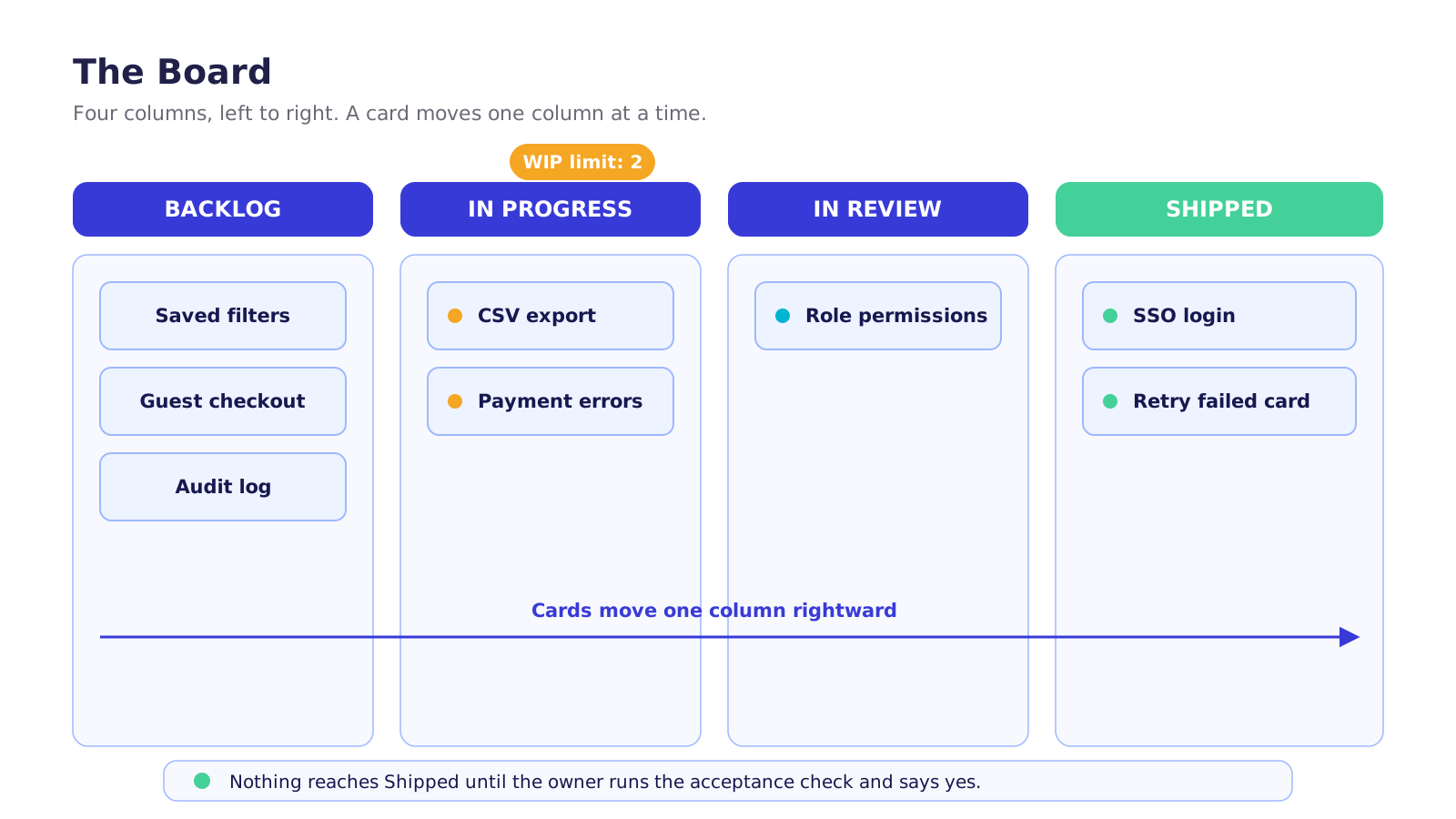
| Column | What it means | Who acts here |
|---|---|---|
| Backlog | Written, scoped tickets waiting their turn, ordered by priority. | Founder / owner sets the order. |
| In Progress | Being worked on right now. Keep this column short. | Developer. |
| In Review | Built, awaiting the acceptance check. | Owner runs the check and approves. |
| Shipped | Approved and live. | Nobody — it's done. |
Two rules keep the board honest. First, a work-in-progress limit: cap how many cards sit in In Progress at once (one or two per developer). A long In Progress column means work is being started, not finished. Second, the approval gate: nothing moves from In Review to Shipped until the owner runs the acceptance check and says yes. That gate is where accountability lives.
The weekly cadence
The board doesn't run itself. A light rhythm keeps tasks flowing and gives the founder a fixed point each week to see progress and steer.
| When | Event | Length | What happens |
|---|---|---|---|
| Start of week | Prioritise | ~30 min | Owner orders the backlog. Pull the top tasks into the week. |
| Daily | Async update | minutes | Each developer posts: shipped yesterday, working on today, anything blocked. Written, not a meeting. |
| On completion | Approval gate | ~15 min | Owner runs the acceptance check, approves or sends it back with a note. |
| End of week | Review | ~30 min | Look at what shipped vs. what was planned. That gap feeds next week's order. |
You don't need to attend a standup or read a burndown chart. You read the board, you read the daily updates when you want to, and you run the approval gate. That's the whole job of seeing the work.
The roadmap slice
A roadmap slice ties a stream of tasks back to a business outcome, so every piece of work has a reason a non-technical reader can defend. This is the artifact that keeps delivery aligned with revenue instead of drifting toward whatever's technically interesting.
It's deliberately not a year-long Gantt chart. A slice covers one outcome and the handful of tasks that move it, with rough timing in weeks. You hold several slices at once, ordered by which outcome matters most.
| Business outcome | Why it matters now | Tasks (in order) | Rough timing | Done when |
|---|---|---|---|---|
| Cut the weekly finance reconciliation | Finance loses an afternoon every Friday; it doesn't scale as orders grow. | CSV export · saved filter presets · scheduled Friday email | Weeks 1–3 | Reconciliation takes under 30 minutes with no manual copying. |
| Reduce checkout drop-off | ~1 in 5 carts abandons at payment; each point recovered is direct revenue. | Guest checkout · clearer payment errors · retry-failed-card flow | Weeks 3–6 | Measured drop-off at the payment step falls and holds. |
| Onboard enterprise customers faster | Sales has three deals stalled on missing access controls. | Role-based permissions · audit log · SSO login | Weeks 5–9 | A new enterprise account can be set up without engineering touching it. |
Each row reads as a sentence a founder would say to a board: we're spending the next three weeks getting finance off manual reconciliation, and we'll know it worked when Friday stops costing an afternoon. The tasks in each row become tickets in the backlog. The outcome column is what you protect when someone proposes a feature nobody asked for.
Keep the slice shallow and current. When an outcome is met, drop the row and pull the next one up. A roadmap that lives in this shape never becomes the spec graveyard, because it was never trying to predict the whole year in the first place.
Download the full PDF for free?
Free download — no account required
