Here we are in 2026, and AI is no longer playing in the sandbox — it's charging full-speed into the heart of businesses and everyday life. According to PwC's 2026 AI predictions, more companies will adopt enterprise-wide strategies, with senior leadership driving top-down programs to capture value from AI.
A survey by the IBM Institute for Business Value reveals that 93% of executives view AI sovereignty — control over data and models — as essential for their business strategy in 2026. A strong lean towards custom-developed, fit-for-purpose AI will dominate how companies deploy and use AI in their daily operations.
The Rise of Agentic AI and Automation
Agentic AI, where systems autonomously handle complex tasks, is poised to dominate 2026. Forbes predicts that AI agents will evolve into "super agents" capable of multi-environment operations, such as browsers and inboxes, with control planes enabling seamless task management. IBM's Chris Hay notes, “We’ve moved past the era of single-purpose agents... In 2026, I see agent control planes and multi-agent dashboards becoming real.”
Statistics from Monte Carlo Data indicate that 95% of AI failures stem from poor data readiness, underscoring the need for governed data to support reliable agents. In business, agentic workflows will automate knowledge work, with PwC forecasting a pivot to value creation over experimentation.
This trend extends to media, where Reuters Institute experts like David Caswell foresee agentic AI automating end-to-end workflows in newsrooms, from newsgathering to fact-checking. Overall, agentic AI could reduce operational costs by up to 30- 40% in knowledge-intensive industries, per IBM estimates.
10 AI Trends to Look Out for in 2026
While agentic AI drives operations, bigger picture shifts loom — here are 10 provocative forecasts from industry leaders and investors:
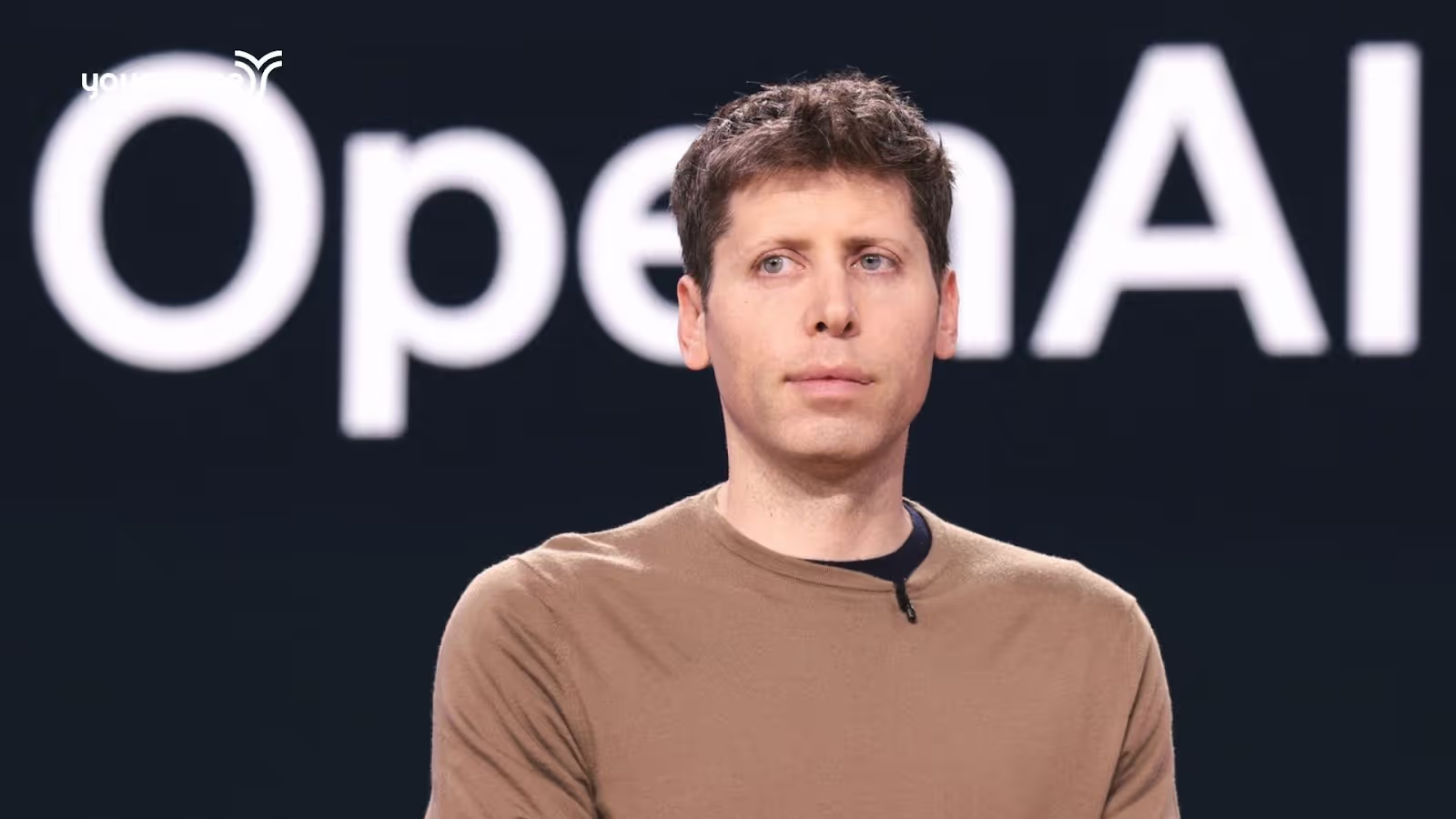
Anthropic will go public. OpenAI will not. Anthropic and OpenAI are burning cash at unprecedented rates — Anthropic nearing $20 billion before profitability, OpenAI around $150 billion. Both need massive capital from public markets. In 2025, explosive growth (Anthropic from $1B to $9B ARR, OpenAI to $20B) fuels IPO hype. Anthropic, prepping with top law firms and a seasoned CFO, races ahead for a blockbuster debut. OpenAI delays due to Sam Altman's fundraising prowess and its sprawling, opaque empire across hardware, robotics, and more.
Prediction: Details of SSI’s research and technology will leak to the public. The big labs will make meaningful adjustments to their research roadmaps as a result. Safe Superintelligence (SSI), founded by legendary researcher Ilya Sutskever, operates in extreme secrecy with a promised paradigm shift beyond current scaling. Despite ironclad NDAs, Silicon Valley leaks are inevitable. In 2026, key details on SSI's novel approach — possibly recursive self-improvement or continual learning — will surface, forcing giants like OpenAI, Anthropic, and Google DeepMind to pivot investments and roadmaps toward these fresh ideas.
China’s domestic AI chip sector will make significant strides, planting the seeds for the eventual decline of Nvidia’s global dominance. U.S. export controls backfired, awakening China's "whole-nation" push with $70 billion in incentives for firms like Huawei and Cambricon. Rejecting watered-down Nvidia chips, China doubles down on self-reliance. In 2026, tangible progress closes the gap (not full parity yet), building a robust domestic ecosystem that erodes Nvidia's monopoly and U.S. strategic edge over time.
Discourse about AGI and superintelligence will become less fashionable and less common. 2025's hype around imminent AGI fizzles as models deliver incremental, not revolutionary, gains — agents remain unreliable, robotics lags. Sober voices like Sutskever (5-20 years) prevail. In 2026, leaders shift talk to practical enterprise value, geopolitics, and jobs. Superintelligence chatter fades; AI's trillions in pre-AGI impact take center stage.
A mundane and esoteric accounting concept — depreciation schedules — will become critically important, especially as debt plays a growing role in the AI infrastructure buildout. With $6.7 trillion projected for AI data centers by 2030, rapid chip obsolescence (e.g., yearly Nvidia upgrades) makes depreciation schedules pivotal. Shortening from 5 to 1-2 years swings billions in reported profits. As debt finances buildouts, mismatched schedules risk crises—making this boring accounting rule a flashpoint in 2026 bubble debates.
Many more AI companies will begin building custom chips. Beyond Nvidia's dominance, custom silicon optimizes for specific needs like robotics or wearables. Reinforcement learning accelerates design from years to weeks. In 2026, labs (e.g., OpenAI's Broadcom partnership) and hardware firms rush in-house chips, spurred by physical AI's rise and co-optimization with models.
Prediction: Sam Altman will step aside as CEO of OpenAI. OpenAI trails Google in models amid sprawling distractions (hardware, chips, rockets). IPO pressures demand discipline; Altman's hires signal transition. In 2026, a choreographed exit positions him for research focus, likely handing reins to an operations-savvy successor like Instacart's Simo for public-era scaling.
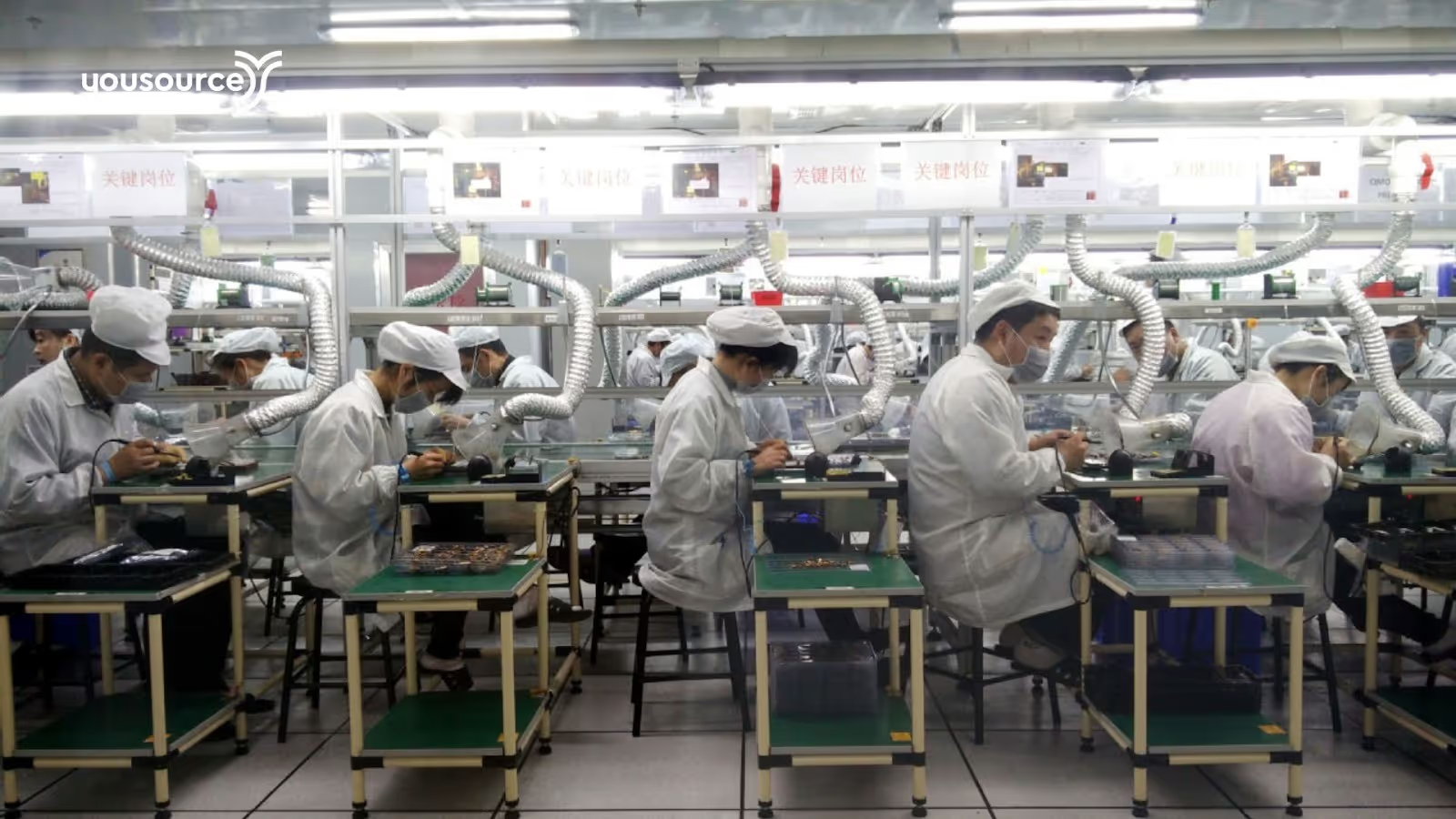
AI will be one of the central issues in the 2026 U.S. midterm elections. The politics will get complex, especially when it comes to AI-driven job loss. Midterms gauge Trump's AI push (e.g., "Genesis Mission"). Republicans back deregulation and China rivalry; Democrats eye safeguards. Job displacement (11.7% workforce, $1T wages) fuels voter anger, forcing tricky balances on energy, security, and innovation across both parties.
One of the large global pharma companies will acquire one of the leading protein AI startups. AI now designs manufacturable antibodies in silico, targeting a $250B market set to triple. Partnerships evolve to full acquisitions for in-house control and talent. Following precedents like EvolutionaryScale's buyout, 2026 sees Big Pharma (Pfizer, Roche, etc.) snapping up stars like Chai Discovery or Nabla Bio.
Brain-computer interfaces will transition from a fringe frontier field to a mainstream technology and startup category. Neuralink’s position as the clear category leader will become shakier. BCIs hit inflection: VC floods in, non-invasive tech (ultrasound, EEG) surges. Ex-Neuralink founders advance safer alternatives (e.g., biohybrids). In 2026, clinical milestones and hype mainstream the field, eroding Neuralink's early lead despite Musk's resources.
The Year AI Matures
2026 will mark AI's maturation, with trends emphasizing efficiency, embodiment, and ethical integration. Businesses that adapt thoughtfully will thrive in this transformative era.