For decades, small and medium-sized enterprises (SMEs) have scaled the same way everyone else did: hire more people when work increases. More revenue → more headcount → more managers → more overhead. It’s a brutally linear equation, and the physics of human labor make it increasingly unsustainable.
Humans come with hard limits:
8 productive hours per day (realistically less after context-switching and meetings)
Fatigue, illness, burnout, and performance variability
A biological ceiling on individual output—no one sustains peak performance for 168 hours a month
Recruitment, onboarding, and ramp-up cycles measured in weeks or months
These constraints have quietly become the biggest invisible tax on SME growth. The good news? The old mechanics are breaking—and the fix is already here.
The Hiring Wait Is Now a Growth Killer
When demand surges, most SMEs still default to “we need to hire.” But the math no longer works.
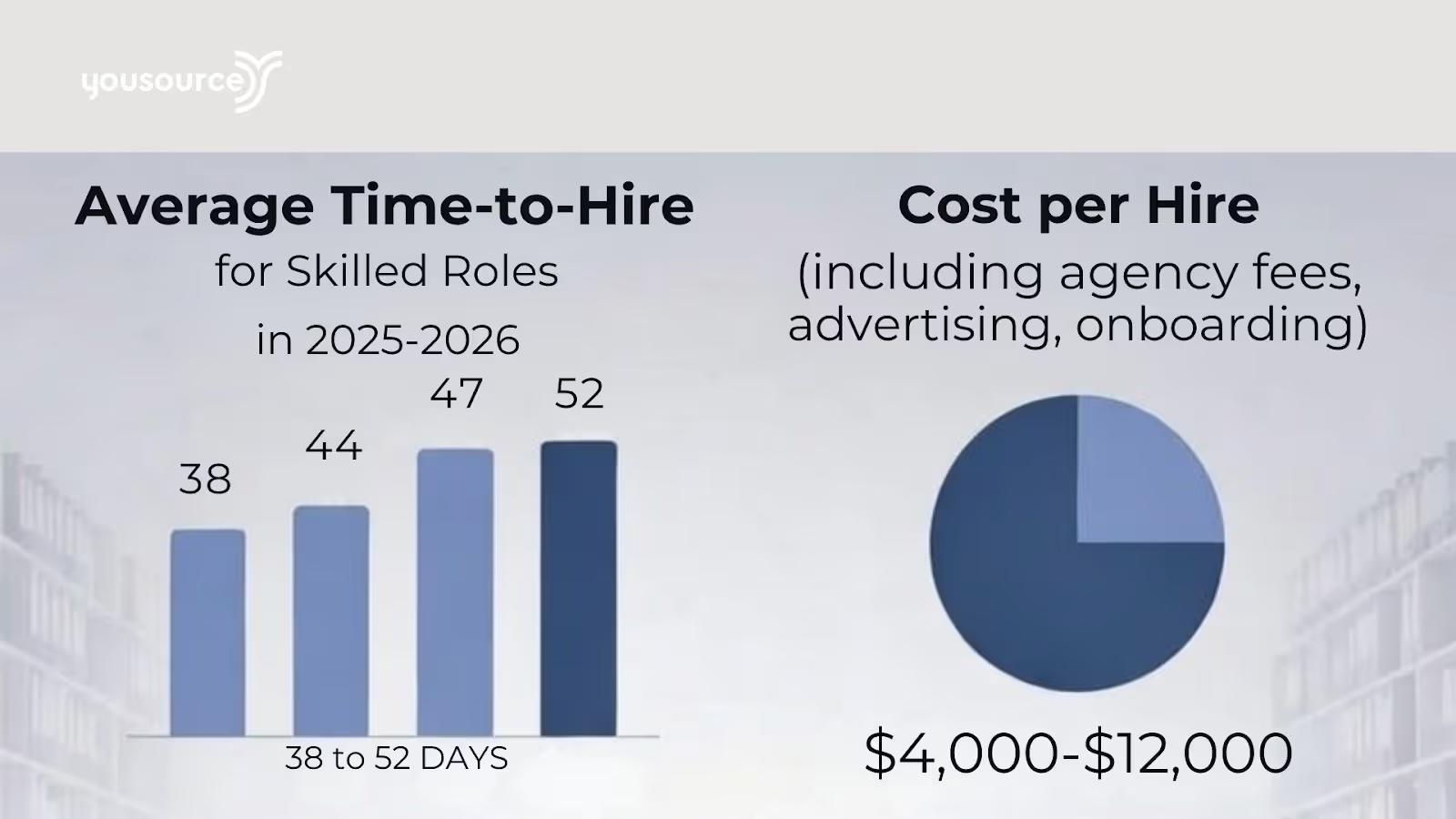
Average time-to-hire for skilled roles in 2025–2026: 38–52 days (depending on market and geography)
Cost per hire (including agency fees, advertising, onboarding): often $4,000–$12,000
During those weeks/months, existing team members absorb the overload → quality drops, turnover risk rises, delivery slips
You’re not just waiting for people; you’re waiting for revenue, reputation, and momentum. Every day of delay compounds.
Modern infrastructure (especially AI-powered automation and augmentation) changes the equation completely. Instead of racing to hire, you deploy capacity in hours or days. No résumés, no interviews, no notice periods—just velocity.
Operational Drag Is Stealing Your Best People’s Time
Your highest-performing managers and team leads should be:
Spotting opportunities
Solving complex customer problems
Designing better processes
Building relationships
Instead, many spend 30–50% of their week on low-leverage work:
Manual data entry and reconciliation
Building the same weekly/monthly reports
Chasing approvals and status updates
Copy-pasting between systems
Scheduling and rescheduling
This isn’t a character flaw—it’s structural. When talented people are forced to act as expensive data processors, the business loses leverage at the exact moment it needs it most.
AI systems don’t just assist here; they eliminate entire categories of administrative drag. Once configured, they run 24/7/365 at consistent quality. That frees your best humans to do what only humans can do well: judgment, creativity, empathy, and strategic thinking.
The Biological Ceiling vs. Structural Capacity
No matter how motivated or talented, a human cannot:
Work without rest
Eliminate variability caused by stress, sleep, or health
Instantly double output the moment demand doubles
Maintain perfect consistency across thousands of repetitive decisions
AI has none of those constraints.
It operates at peak performance continuously
Scales horizontally by adding compute (not people)
Improves with more data rather than degrading with fatigue
Executes without emotional friction, office politics, or personal life interruptions
This is why scaling is moving from linear (add headcount → add output) to super-linear (add infrastructure → multiply output).
SMEs Are in the Sweet Spot to Win the New Game
Large companies are weighed down by:
Legacy systems
Multi-year vendor contracts
Risk-averse procurement processes
Layers of approval that slow experimentation
SMEs have natural advantages:
Fewer decision layers → faster pilots
Lower political resistance to change
Ability to experiment in one department or process without corporate red tape
Direct visibility into ROI
Many SMEs that started small AI automation projects in 2024–2025 are already reporting:
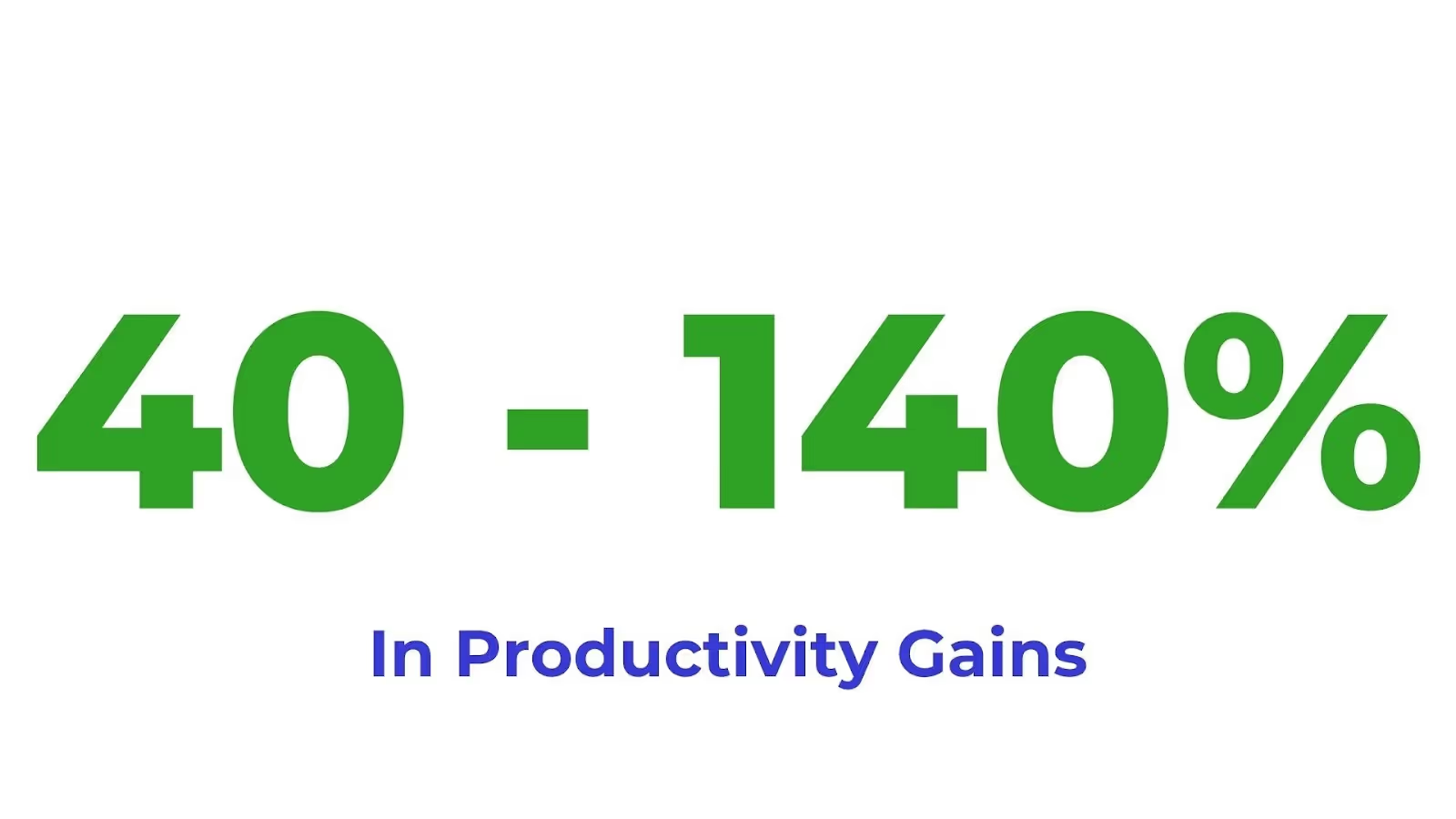
40–140% productivity gains in targeted functions
20–60% reduction in time-to-delivery for key services
Ability to take on 2–4× more volume without proportional hiring
The New Scaling Playbook for SMEs (2026 Edition)
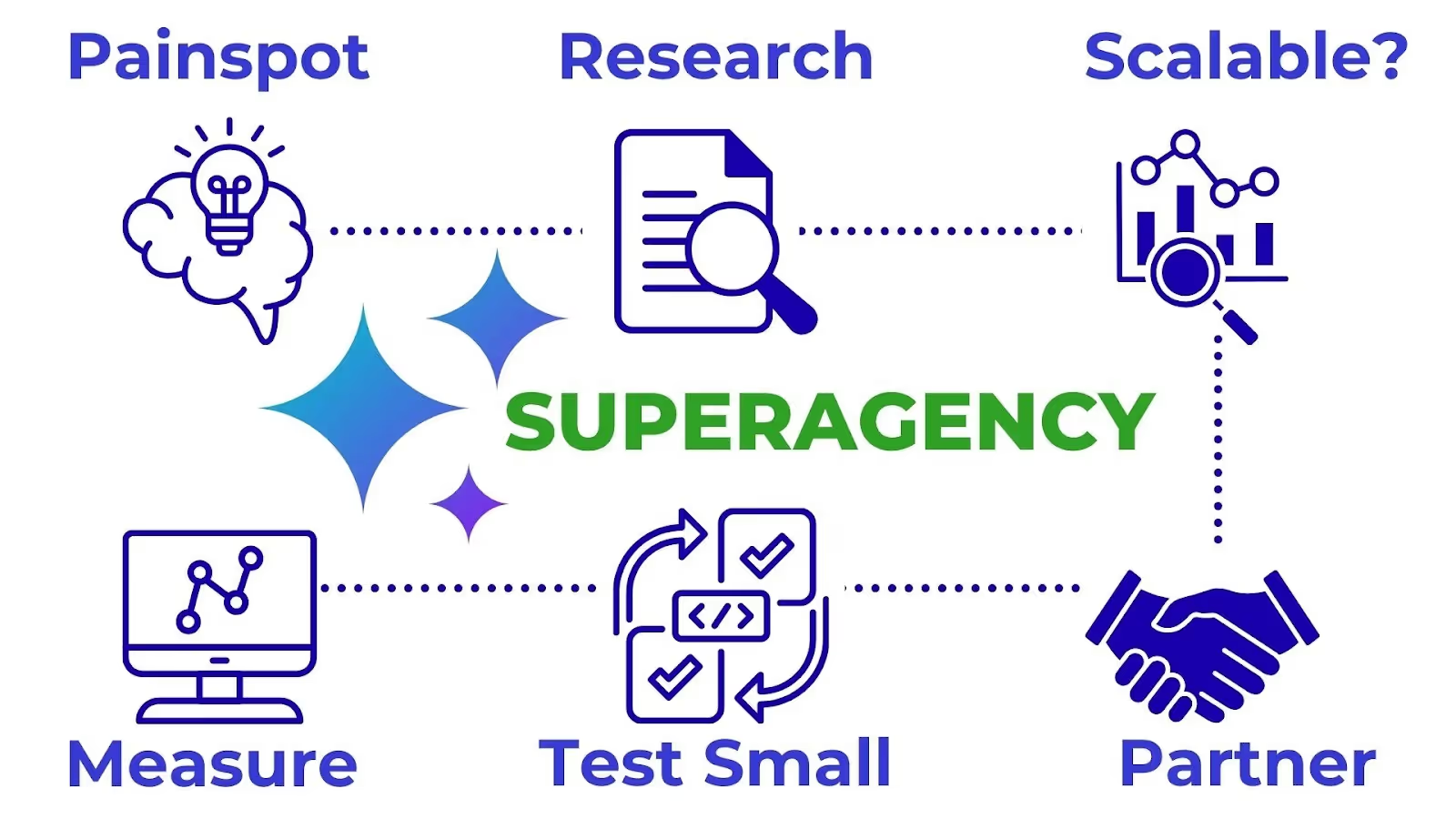
Audit for drag first Map where your highest-paid people spend time on work that follows clear rules or patterns. That’s your highest-ROI starting point.
Pick one painful, repeatable process Customer onboarding, proposal generation, invoice chasing, social-media content, inventory forecasting, basic support triage—choose the one hurting most.
Deploy, measure, iterate fast Start with off-the-shelf or low-code AI tools. Track time saved, error reduction, and revenue impact after 4–8 weeks. Double down on winners.
Re-invest liberated capacity Use the newly available hours for sales, product innovation, customer success, or entering new markets—not for hiring to stand still.
Shift mindset from “more people” to “better systems” The question is no longer “How many people do we need?” It’s “What infrastructure gives us the fastest, most defensible velocity?”
The Win
The mechanics that built the last 50 years of business scaling are broken. The ceiling isn’t money or market size—it’s biology. SMEs that recognise this first and act decisively will pull away from competitors still playing the old linear game. They won’t just grow faster; they’ll grow differently—more resilient, more profitable, and far less dependent on constant hiring cycles.
The era of trading time for talent is ending. The era of trading infrastructure for velocity has begun.
Which high-friction process in your business is still being handled entirely by humans—and how much faster could you move if it wasn’t?