When the MIT Iceberg Index announced that AI could “replace nearly 12% of the U.S. workforce,” it was designed to grab attention. And for CEOs and CIOs of small and mid-sized businesses, it probably did more than that. It likely sparked worry, questions, and even resistance. But here’s the truth: this headline is not a warning. It’s a signal. A competitive one.
MIT’s researchers aren’t predicting a world where millions of people are abruptly without work. They’re mapping out where AI is already capable of stepping in today, where inefficiencies live inside companies, and where early adopters can unlock enormous value long before their competitors catch on.
The depth of the Iceberg Index is what makes it different. MIT didn’t simply look at job titles. Instead, they simulated the real working activities of 151 million Americans, breaking down more than 32,000 skills across 923 occupations. They analyzed actual task-level behavior across over 3,000 U.S. counties, giving unprecedented insight into what AI can do right now.
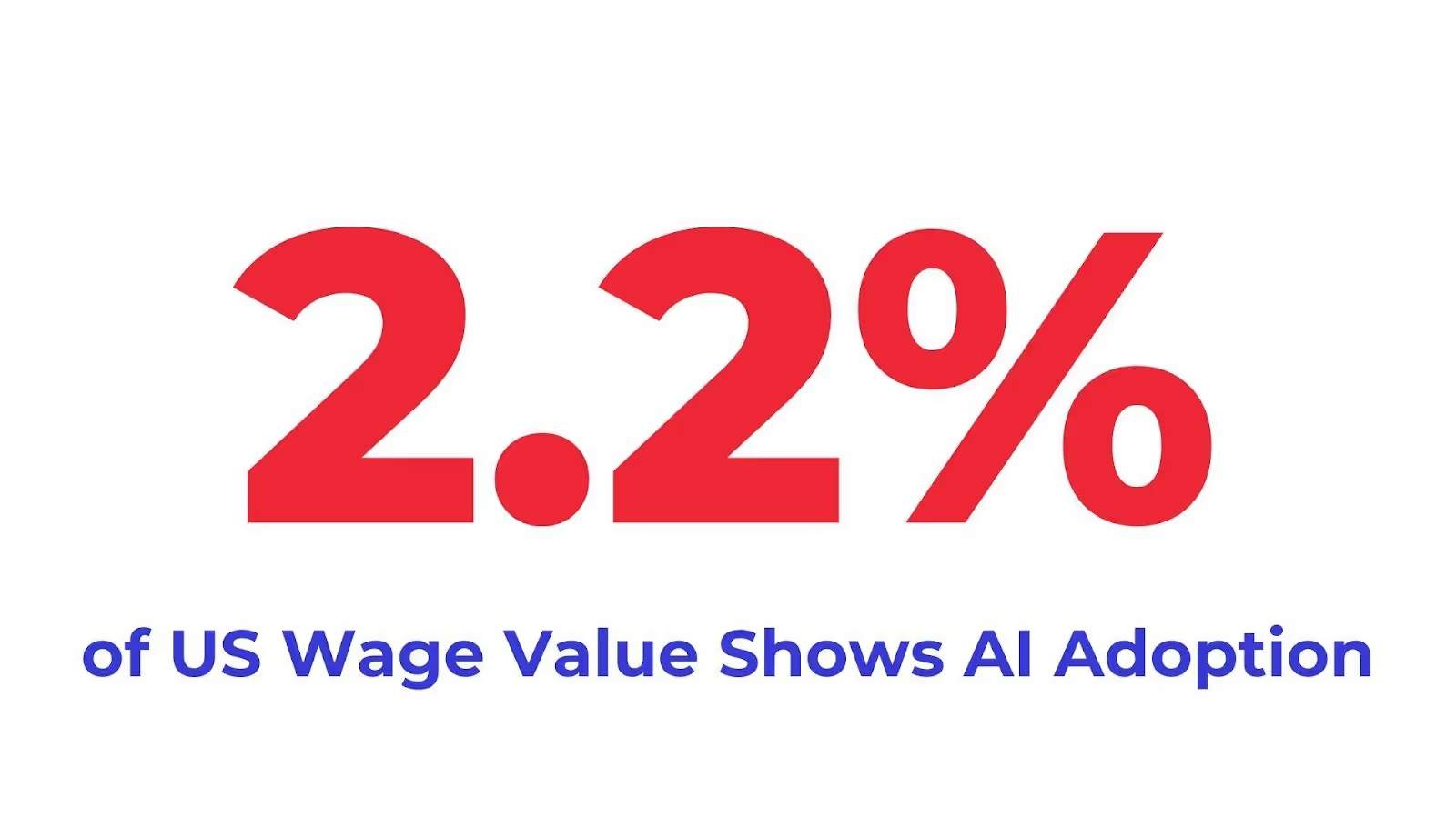
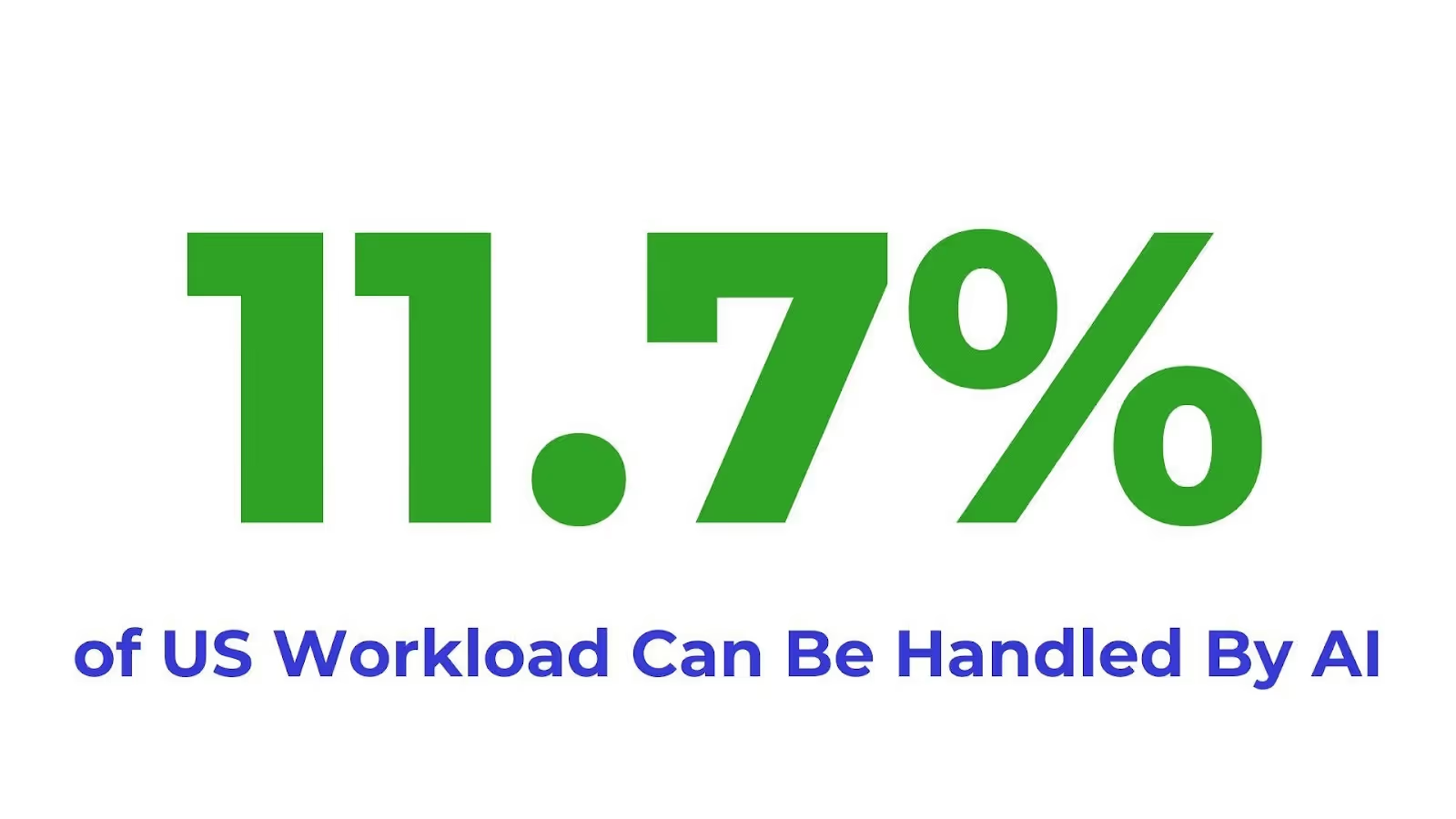
Here are the two statistics that matter most:
This means most companies are barely scratching the surface of what AI can currently do.
That’s the hidden iceberg. The opportunity beneath the surface. The work your team is doing manually that no longer needs human involvement.
Large enterprises will spend years forming committees, reviewing risks, building policies, and running pilots. SMEs do not have that burden. They can move now. They can reap the benefits of automation with a fraction of the bureaucracy.
This creates a rare moment where smaller companies can leapfrog slower competitors. A 50-person company that automates 10–20 hours of admin work per employee per week will outperform a 500-person competitor still drowning in spreadsheets, manual reporting, and email chains.
The Iceberg Index reinforces what most leaders already know: employees spend 30 – 40% of their time on repetitive, rules-based tasks. These include copying data between systems, formatting reports, processing documents, handling scheduling, triaging generic customer requests, and generating the same summaries every week.
This is not strategic work. It’s not human work. And it’s exactly where AI is strongest.
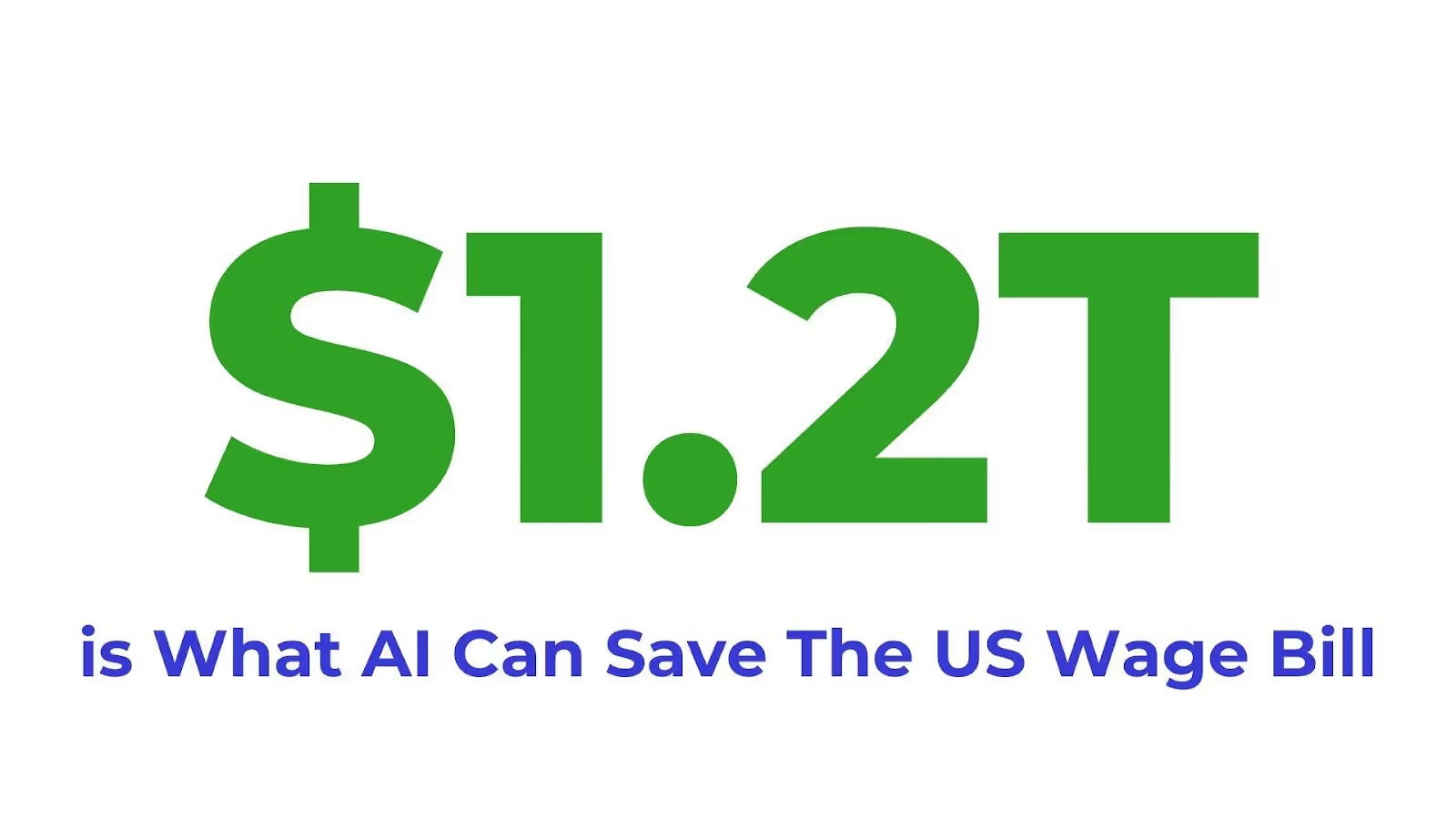
AI does not eliminate jobs. It eliminates inefficiencies. The companies that use AI will reinvest saved hours into growth, innovation, customer experience, and competitive advantage.
Think of MIT’s findings as validation that AI is ready—right now—to help you:
Increase productivity
Reduce overhead
Shorten processing times
Improve accuracy
Unlock hidden capacity in your teams
The Iceberg Index reveals that the companies who benefit most from AI aren’t the large ones with billion-dollar budgets. It’s the ones with leaders who make decisions quickly, embrace new tools, and treat AI as an opportunity rather than a threat.
The next decade of business will be shaped by CEOs who understand one truth: AI won’t replace people. But companies using AI will replace companies that don’t.
Part 2: See where AI ROI will hit first.
Part 3: A practical roadmap for the SME CEO to AI ROI