If you’re grabbing a quick coffee between client meetings or stealing a moment of calm amid tax season chaos, you know the feeling all too well: chasing documents, reconciling accounts late into the evening, and wondering where all the hours went. Shouldn’t working harder, mean larger bills for my clients?
You’re not alone in asking that. Accounting firms — from solo practices in small towns to mid-sized and larger operations in bustling metro areas — are all facing the same pressure: how do we reclaim time from the grind and redirect it toward high-value advisory work that clients actually pay for?
The encouraging thing is that a shift is taking place through practical, managed AI-assisted automation. Forget the hype and the buzzwords around AI - this is what is working and not working right now.
McKinsey’s 2025 Global State of AI survey found that 88% of organizations are now regularly using intelligent automation technologies in at least one business function (which includes accounting and tax practices).
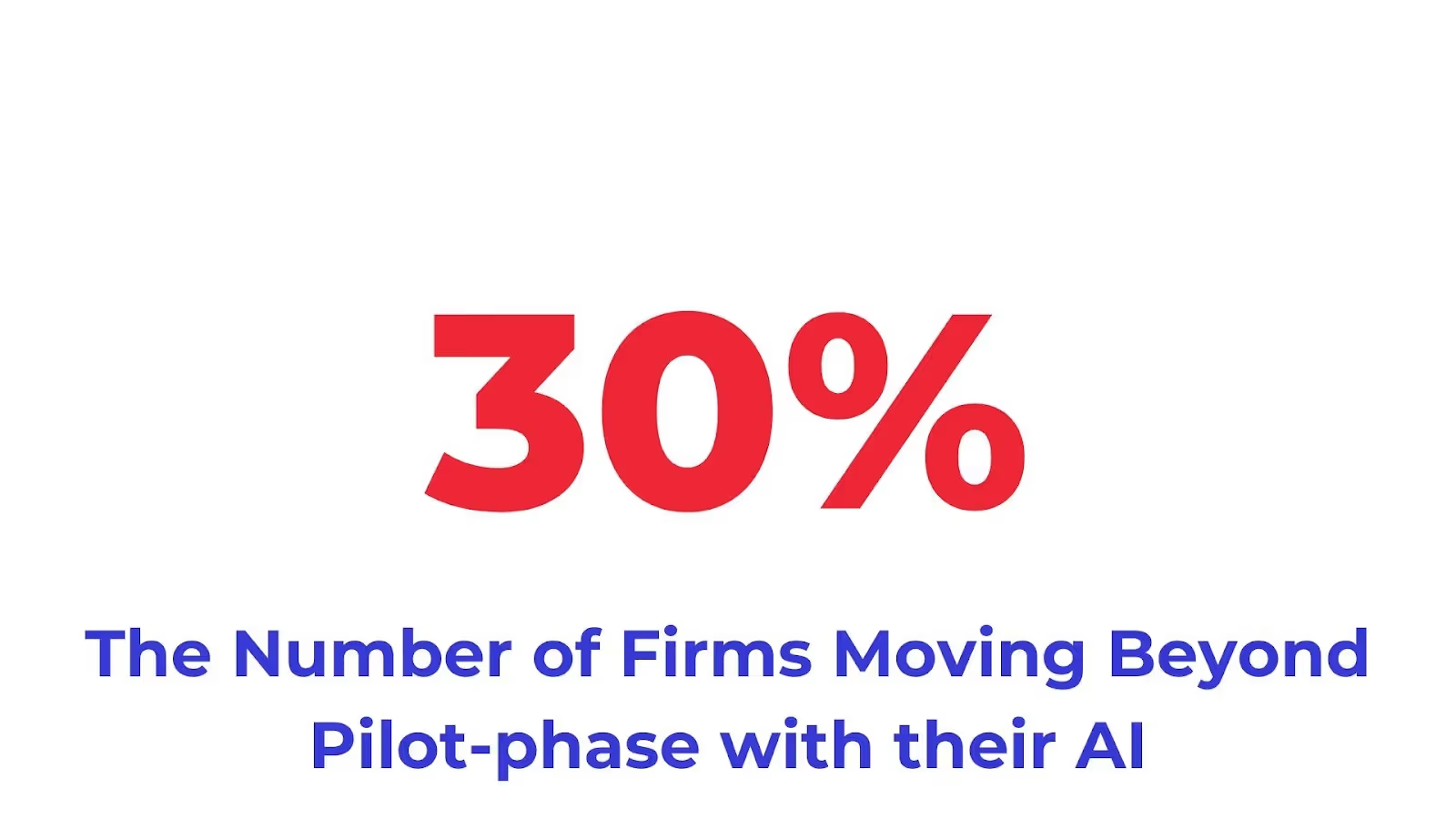
That said, only about one-third of organizations have moved beyond pilots to enterprise-wide scaling. Larger firms (typically those with bigger resources) are scaling at higher rates — around 47% for the biggest players — while smaller ones hover closer to 29%. The gap exists, but it’s not insurmountable. Firms that thoughtfully redesign workflows around managed automation see stronger results regardless of size.
McKinsey identifies “high performers” (roughly the top 6% reporting meaningful value and at least 5% EBIT impact) as those nearly three times more likely to fundamentally custom redesign individual workflows. That redesign step turns out to be one of the strongest predictors of real impact.
On the more advanced side, 62% of organizations are experimenting with managed, custom automation systems capable of handling complex, multi-step processes, and 23% are already scaling them in at least one function.
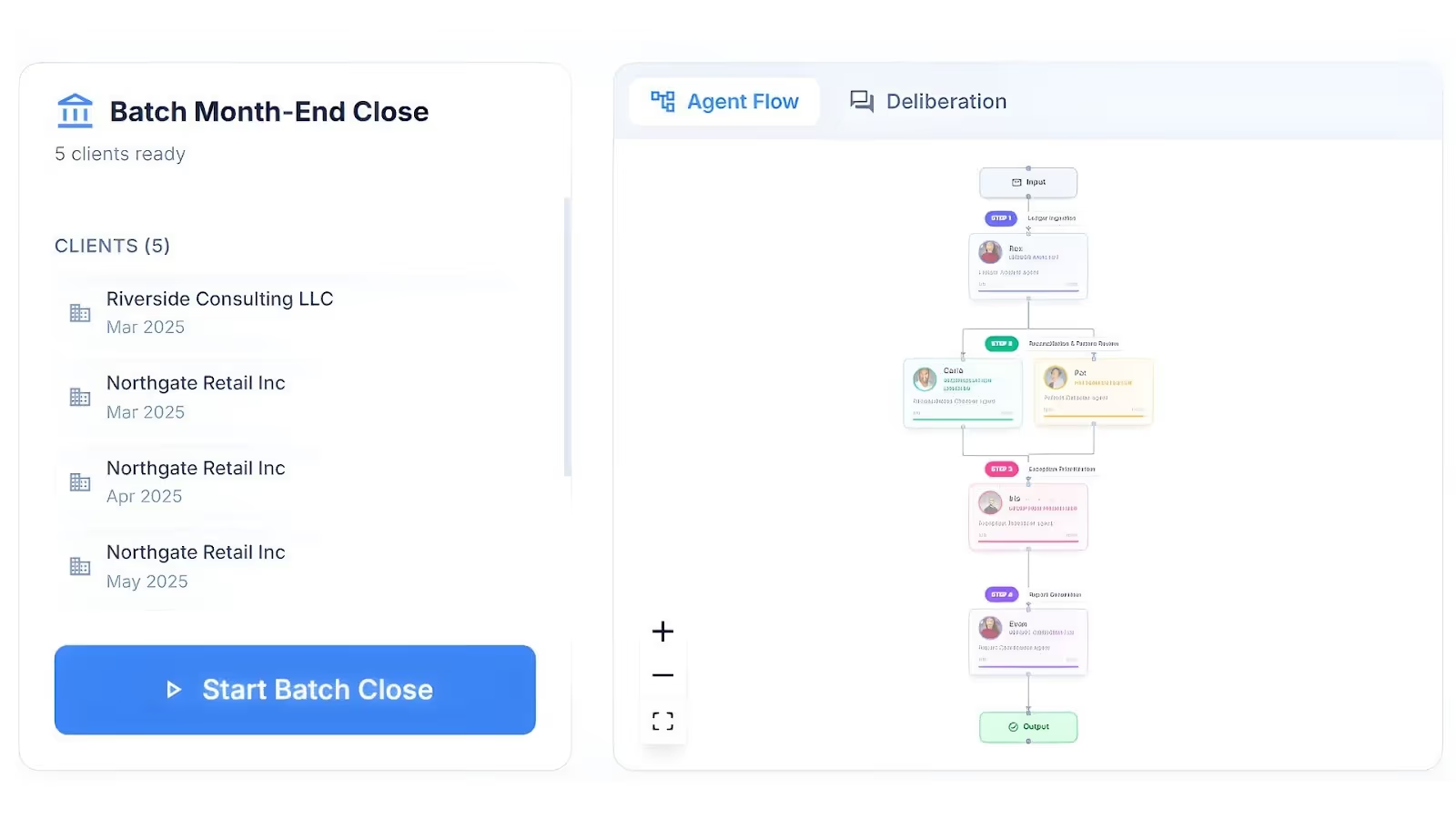
In finance and accounting contexts, these custom systems help orchestrate tasks like the monthly close, invoice matching, or pulling together client reports — work that once required heavy manual coordination across tools and teams.
Every firm’s internal processes differ. Custom is key.
Here’s where it gets relevant for US accounting firms. McKinsey’s insights on finance teams show that managed AI-assisted automation can meaningfully reduce time spent on routine work. For example, in the accounting close or report drafting, these systems can handle data pulling, reconciliation, exception flagging, and initial drafting — leaving humans to focus on judgment calls and client strategy.
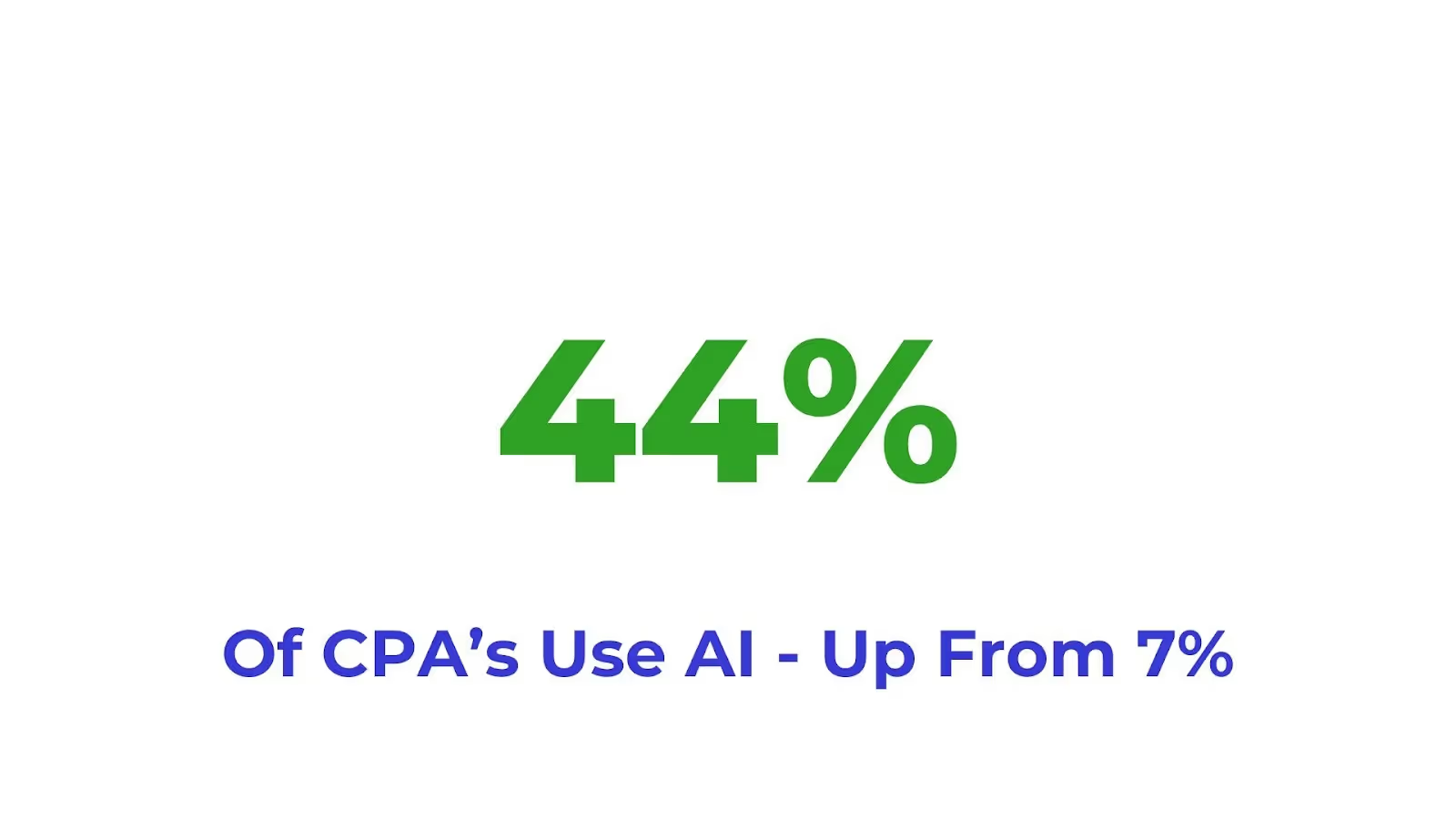
A proprietary McKinsey survey of CFOs found that 44% were using generative capabilities across more than five use cases in 2025 (up sharply from 7% the prior year), with many noting faster insights and better controls.
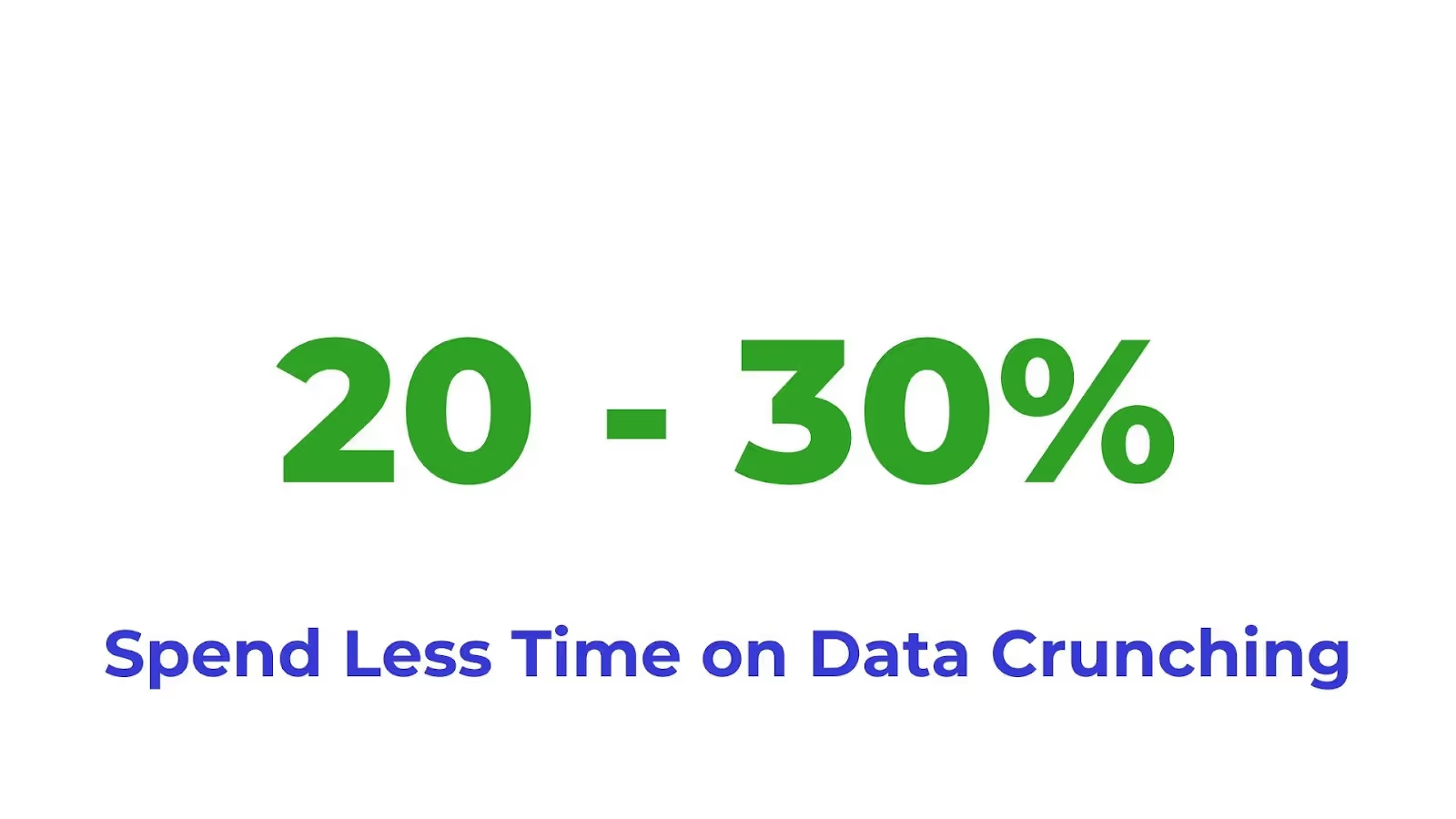
Finance professionals in robust implementations reportedly spend 20–30% less time on data crunching and more time acting as strategic business partners. In short - they are generating more billable hours while doing more than what they could have in the past without adding headcount.
Talking about headcount. Burnout for CPAs is real. But managed automation can take over the repetitive admin load and teams see improved utilization, higher realization rates, and fewer late nights on low-value tasks early on in the game.
The emphasis for success is on custom automation workflow design to reach efficiency gains in back-office functions and to create more revenue opportunities through more billable hours.
McKinsey is straightforward: there’s still a noticeable gap between adoption of AI Assisted Automations and measurable value for CPA firms in the USA.
Many firms start off and then stay stuck in experimentation because they haven’t fully custom automated their processes or are trying to use a built-in or off-the-self AI feature for their unique company processes. What you need is proper oversight and expertise in custom AI-assisted automation that is built around what your firm actually does and where you actually need help in slashing repetitive tasks.
Success tends to come from treating your plug-in AI Automation systems as managed partners — incorporating experts in the field, applying clear human review loops, monitoring mechanisms, and reusable components with the goal always being the ability to scale in future.

Whether you run a solo or small practice in the heartland, a 20–50 person mid-market firm, or are part of a larger organization, McKinsey’s data points to a consistent pattern: managed AI-assisted automation is moving from experimental to operational. Firms are already seeing the benefits in reclaimed hours, stronger controls, and the ability to redirect effort toward higher-value client work.
But the firms pulling ahead aren’t simply automating isolated tasks. They’re stepping back and intentionally redesigning how their practices operate — building workflows where people and intelligent systems work together seamlessly.
That shift doesn’t happen all at once. It starts with small, deliberate changes: identifying repetitive processes, introducing the right tools, and gradually reshaping how work flows across your team. Over time, those incremental improvements compound into a more scalable, resilient, and client-focused practice.
The direction is clear. Accounting is becoming more efficient, less burdensome, and far more centered on professional judgment and client relationships — not manual data handling. Firms that embrace this evolution thoughtfully won’t just keep up; they’ll be better positioned to grow, differentiate, and deliver the kind of service clients increasingly expect.